Español
 Pусский



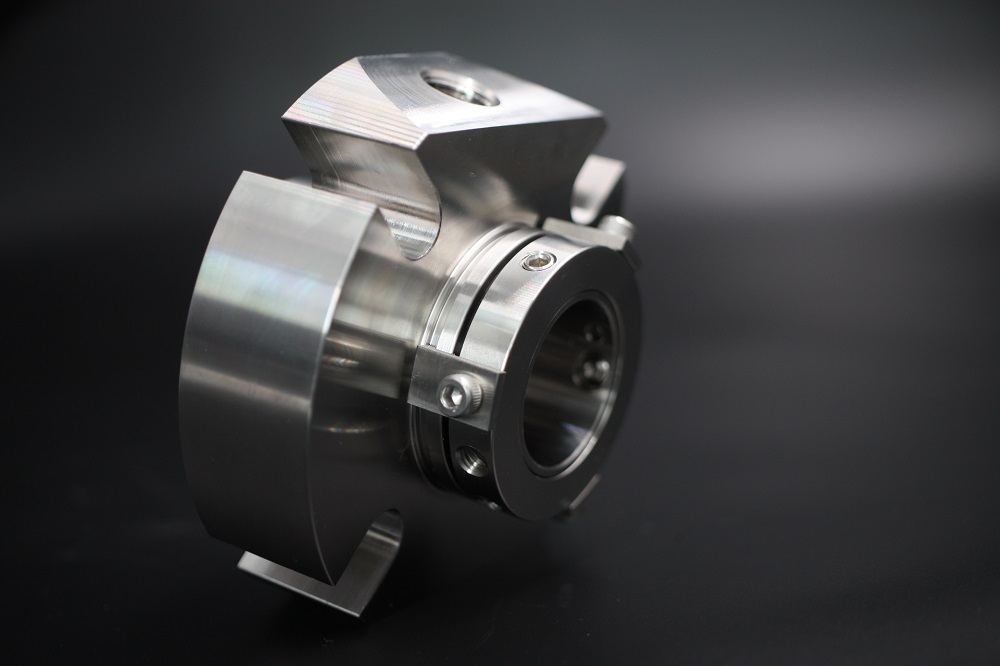
AS-CH150 single cartridge mechanical seal is to replace Chesterton 150 single seal in cartridge form.
Operating Limits:
Pressure:711 mm (28") Hg Vacuum to 20 bar g (300 psig)
Temperature:-55° C to 300° C (-67˚ F to 570˚ F)
Speed:20 m/s (4000 fpm)
Material Combinations :
Faces:CB, SSC
Elastomers:FKM, EPDM, FEPM, ChemLast™
Metals:1.4401 (316SS)
Springs:2.4819 (Alloy C-276)
Features:
Simple upgrade to reduce plant maintenance costs;
Reliable design that prevents leakage, shaft fretting damage, and downtime so as to increases seal life;
Ideal for baseline applications and for upgrading packed or component sealed equipments;
Available from 25 mm to 120 mm (1.00"to 4.75")

About Us:


Background Infomation:
What are the auxiliary facilities of mechanical seals?
Auxiliary facilities of mechanical seals are a general term for many components.They include filters, hydrocyclones, flow-restricting orifice plates, coolers, pressure tanks, booster tanks, various monitoring instruments, pipelines and fittings, etc. In actual work, one or more types can be used and selected according to specific conditions. Lubrication, cooling or temperature adjustment, flushing, purification, dilution and flushing of the media in the mechanical seal device are achieved by means of flushing, cooling, filtration and separation, and the working environment of the mechanical seal is improved.
The primary mode of operation of all ancillary facilities is flushing. The so-called flushing is to inject the sealing fluid into the sealing cavity to complete functions such as lubrication, cooling, and purification, and change the unfavorable environment into a working environment acceptable to the mechanical seal.
There are many types of flushing, which can be divided into self-flushing, circulating flushing and injection flushing according to the flushing method and sealing fluid. Self-flushing is to use the pressure difference generated by the pump itself or the pressure difference generated by the pumping device in the sealed cavity to make the sealed medium pass through the sealed cavity to form a closed circuit to achieve flushing; cyclic flushing is through the facilities that generate pressure differences (such as pumping rings). etc.) to circulate the additional sealing fluid (known as spacer fluid) to achieve the purpose of flushing; injection flushing is when the sealed medium is not suitable for sealing fluid, inject another liquid into the sealing cavity from the outside to improve the sealing working conditions of the mechanical seal.
Temperature adjustment facilities: Use fluid at a suitable temperature to cool or keep warm (or heat) the sealing cavity, stationary seat and other parts of the mechanical seals, so as to improve the sealing stability and prolong the service life of the said mechanical seals.
These devices do not come in contact with (or mix with) the fluid being sealed. It should be pointed out that flushing also functioning as a temperature regulating facility can directly cool the mechanical seal.
Filtration and separation: Use filters and hydrocyclones to filter out impurities in the sealing fluid during flushing to ensure that the sealing end faces of the mechanical seals are not damaged.
In addition to the above-mentioned auxiliary facilities, there are heat exchangers, orifice plates, pressure storage tanks and instruments for realizing the above functions, all of which constitute sealing systems.
Send Message
Related Products