Español
 Pусский
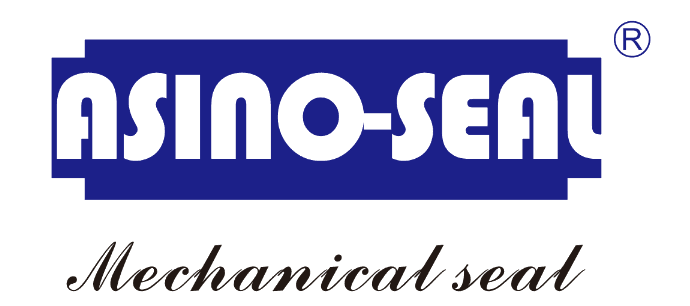


AS-C5600SVQ single cartridge mechanical seal is to replace Johncrane 5610VQ seal. The Type 5610VQ is a dual cartridge mechanical seal using the ear drive O-ring pusher seal head together with a quench gland including a carbon ring throttle bushing. The ear drive O-ring seal head is specially designed & totally interchangeable,thus making the 5600 series product range's functions more suitable for standard ANSI & large bore pumps.

About Us:


Background Knowledge:
What are the factors that affect the sealing performance of mechanical seals?
The tightness of the mechanical seal is its most important indicator. There are many influencing factors, including sealing structure, material, & how you manufacture it, how you install it, medium properties and how you use it, etc.If there is a problem in this link, the sealing performance will be affected. These factors can be divided into two categories: factors regarding the seal itself and the conditions of use.The seal structure, material and manufacture belong to the"seal itself", these factors are completed in the manufacturing plant, and the quality of the seal depends on the manufacturing plant. The installation, media properties and use, etc. belong to the range of “conditions of use”, and how to use it correctly depends on the user. This article only discusses the influencing factors that belong to the seal itself.
1. How does the load factor affect the sealing performance of the mechanical seal
From the point of view of sealing performance, the user would like the mechanical seal to have a larger load coefficient, which can ensure a higher specific pressure, and the stability and reliability of the mechanical seal are better. However, a large load coefficient means a lot of frictional heat. If it cannot be dissipated in time, the temperature of the sealing end surface of the mechanical seal will be too high. When it reaches the vaporization temperature of the medium, vaporization will occur, the liquid film will be destroyed, the wear will increase, and the service life will be shortened.Especially under high pressure working conditions, the use of unbalanced mechanical seals with a load factor greater than or equal to 1.0 is not allowed. However, for a balanced mechanical seal with a load factor less than 1.0, the sealing end face of the seal may be pushed away, and the stability is poor. In actual work, it is not desirable to generate too much heat, but also to have sufficient stability. After weighing the pros and cons,in the internal flow mechanical seal, the load factor is better between 0.75 and 0.85. Unbalanced mechanical seals (K=1.1~1.2) can also be used when the seal fluid pressure is low. According to the survey of several large petrochemical enterprises in China, the load coefficient is related to the properties of the medium. For heavier components and media that are not easy to vaporize, the load coefficient should be larger, and vice versa. The value of the load coefficient is not selected in isolation, but should be considered comprehensively with the specific pressure of the spring. .When the specific pressure of the spring is larger, the load coefficient can be smaller, otherwise it should be larger.
2. How does the specific pressure of the spring affect the sealing performance of the mechanical seal
The specific pressure of the spring is an important factor that promotes the fit of the sealing end faces of the mechanical seal. When the pressure is low when the pump is stopped and started, or the normal working pressure in the sealing chamber of the mechanical seal is low, or the pressure fluctuates greatly during work, the spring specific pressure becomes the main component of the end face specific pressure. The size of the specific pressure of the spring should be considered comprehensively according to the sealing structure, working conditions, medium properties and load coefficient. The larger the specific pressure of the spring, it is beneficial to the bonding of the sealing end face of the mechanical seal, improving the followability, and enhancing the sealing stability. If it is too large, the frictional heat will increase, the power consumption will increase, the wear will be large, and the service life will be shortened. If the spring specific pressure is too small, the leakage is large, and the sealing stability is poor. For the built-in internal flow seal, the spring specific pressure is between 0.1~0.25MPa. For medium with good lubricity, low speed or low pressure working conditions, the upper limit of spring ratio is taken, otherwise the lower limit is taken.
As mentioned earlier, it should also be considered in conjunction with the load factor.For the externally installed unbalanced seal, the specific pressure of the spring has a greater effect, which is the only force to make the sealing surface fit, and the specific pressure of the spring is much larger than that of the internally installed internal flow seal. When the medium pressure is around 0.1MPa, the spring specific pressure is 0.3~0.45MPa; when the medium pressure is 0.25MPa, the spring specific pressure should be 0.45~0.7MPa. In the agitator, due to its lower working speed, larger shaft swing and larger operating pressure fluctuations, the specific pressure of the spring should also be appropriately larger. For high-speed mechanical seals (mostly internal flow seals), although the sealing fluid with good lubricating performance is used, considering the followability of the seal, the specific pressure of the spring should be larger, generally 0.2~0.3MPa. At this time, the load factor is small.
3.How does the the roughness of the sealing end face affect the sealing performance of the mechanical seal
For ordinary mechanical seals, from a macroscopic point of view, under normal circumstances, the two end faces are parallel and in solid contact. From a microscopic point of view, any surface is uneven, that is, it has a certain roughness. It is usually said that two planes are in contact, but actually the high points of the two planes are in contact, but most of the surfaces are not in contact, and there are still certain gaps. The rougher the surface, the greater the gap height and the greater the leakage.In order to maintain a good sealing performance, a greater end-face specific pressure must be applied. As we all know, if the specific pressure of the end face is too large, it will inevitably increase the heat generated by friction, which is unfavorable. Therefore, certain requirements are put on the roughness of the sealing surface. This not only ensures good sealing, but also ensures a longer service life of mechanical seal.
4.How does the width of the sealing end face affect the sealing performance of the mechanical seal
For friction pairs of the mechanical seal with parallel seal faces, the width of the seal faces has little effect. In order to seal the pressure of 2MPa, only a width of 0.5mm is enough, and if the width of the sealing end face is increased too much for the sake of strength and rigidity, the heat generation will increase, the thermal deformation will be large, and eventually It leads to increased leakage, so the sealing end faces that is too wide is detrimental to the sealing performance of the mechanical seal.
5.How does the the width of the sealing end face affect the sealing performance of the mechanical seal
The premise of studying mechanical seals is that the two sealing end faces are parallel to each other, which is not entirely the case in reality. Due to the influence of manufacturing, installation and sealing structure, load and temperature during operation, the two sealing end faces of the mechanical seal may present three shapes: convergent, flared and parallel. After the newly installed and put into use mechanical seal runs for a period of time (commonly known as"run-in"), the two sealing surfaces of the mechanical seal tend to be parallel, and the leakage gradually decreases. The running time varies from several hours to several months, depending on the shape of the gap, the size of the load, the sliding speed, the performance of the friction pair and the nature of the medium. The so-called convergent gap shape means that the gap near the outer edge of the end face is larger, the inner edge is in contact, and the gap gradually decreases along the leakage direction. The distribution of liquid film pressure in the gap is not linear, which is greater than that of the parallel sealing end face, resulting in an increase in the opening force of the seal.Since the spring force, which is the main part of the closing force, does not increase, the leakage is large and the work is unstable in the convergent seal. However, the lubrication is sufficient, and the wear rate of the sealing end faces of the mechanical seal is small.
Since the contact area of the seal is reduced and the spring force is constant, the spring specific pressure increases. At this time, there are two possibilities. The first possibility is that if the lubricity of the medium is not good, the wear will increase, and the contact area will gradually increase until the sealing end faces are all in contact. At this time, the two sealing end faces have become parallel and the running time is short; The second possibility is that the lubricity of the medium is very good. Although the specific pressure of the spring increases, the wear of the sealing end face is also very small. It takes a long time to complete the running-in period, and the leakage during the running-in period is larger than that of the normal seal. If the shape of the gap on the sealing end face is flare-shaped,another situation will occur, that is, the outer edge of the sealing end face is in contact, and there is a gap on the inner edge. There is liquid film pressure in the contact part of the sealing end face, and the total liquid film pressure is smaller than that of the parallel sealing end face. The spring force remains the same, because the contact area decreases (due to the increase of the inner diameter), the spring specific pressure and load coefficient increase, and finally the specific pressure of the end face increases a lot, the leakage is small, but the wear is intensified. If the lubricity of the medium is good and the wear is relatively uniform, then the sealing end face may be smooth and the seal can still be used. Conversely, if the wear is severe, the finish (roughness) of the sealing end face is destroyed, and the leakage increases greatly, the rotary face and stationary seat may also need to be replaced.
6.How does the the width of the sealing end face affect the sealing performance of the mechanical seal
E. Meyer from Germany once conducted experiments on how the sliding speed and the material of the friction pair affect the sealing performance of the mechanical seal, and came to the following conclusions: If the material of the rotary face has no change, when the thermal conductivity of the material of the stationary seat increases, the leakage decreases;Thestationary seat material is the same, but the rotary face material is changed, the thermal conductivity increases, and the leakage decreases; The reason for the decrease of leakage is: large thermal conductivity, timely heat dissipation, small temperature gradient of the sealing ring, small thermal deformation, and low leakage. (2) The thermal conductivity of the rotary face is large, the heat dissipation performance is good in high-speed rotation, the temperature gradient of the sealing ring itself is small, the thermal deformation is small, and the leakage is minimal. (3) Under the same conditions, the higher the speed, the greater the leakage. The main reason is that due to the high speed, the frictional heat generated of the mechanical seal is large and the thermal deformation is large.
7.E. Meyer has done a lot of experimental research through water, diesel oil and lubricating oil, and these studies are all carried out after a long enough time (100 hours) of running-in of the mechanical seal. During this period, the surfaces of the internal friction pairs become parallel again due to wear. Experiments have confirmed that the viscosity of the medium has no effect on the leakage in the boundary friction range, but the viscosity of the medium cannot be ignored in the mixed friction and liquid friction.
For outflow type mechanical seal, as the direction of leakage is the same as the direction of centrifugal force, the amount of leakage increases; while for inflow type mechanicaL seal, the direction of the two is opposite, and centrifugal force hinders leakage.When the two sealing parameters are the same, the leakage of the outflow seal is 10 times that of the inflow seal. Therefore, the outflow seal structure is generally not used, and the outflow seal is only used in some corrosive media.
In addition to the above-mentioned various factors that have an impact on the sealing performance, auxiliary facilities (such as flushing, etc.), correct installation and reasonable use also have an important impact on the sealing performance and service life of the mechanical seal
Send Message
Related Products