Español
 Pусский
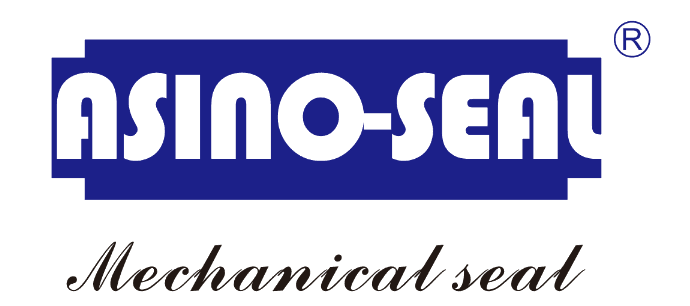


This is metal bellow type cartridge mechanical seal made as per drawing

About Us:
Background Knowledge:
How to choose the mechanical seal of light hydrocarbon pump
1.How to choose the sealing parameters of the mechanical seal of the light hydrocarbon pump
The light hydrocarbon pump delivered medium used in refineries generally refers to C and their mixtures (containing a small amount of other components, commonly known as liquid hydrocarbons). For the mechanical seal of this type of medium, a balanced single mechanical seal is sufficient, and there is no need to use a complicated double mechanical seal.The key issue here is the selection of the load factor of the mechanical seal.
How to choose the mechanical seal of light hydrocarbon pump
1.How to choose the sealing parameters of the mechanical seal of the light hydrocarbon pump
The light hydrocarbon pump delivered medium used in refineries generally refers to C and their mixtures (containing a small amount of other components, commonly known as liquid hydrocarbons). For the mechanical seal of this type of medium, a balanced single mechanical seal is sufficient, and there is no need to use a complicated double mechanical seal.The key issue here is the selection of the load factor of the mechanical seal.
From the perspective of force balance, in order to prevent the seal from opening, it is better to have a larger load factor. From the perspective of heat balance, in order to reduce the phenomenon of vaporization, it is hoped that the load factor of the mechanical seal will be smaller. In the case of comprehensive consideration, under the premise that the sealing surface of the mechanical seal is not opened, a smaller load factor should be chosen. When the pressure in sealing chamber of the mechanical seal of the light hydrocarbon pump is 0.6~2.0MPa, the load factor can be 0.75~0.85. The corresponding spring specific pressure is 0.11~0.2MPa. The loading coefficient of light hydrocarbons with smaller specific gravity is slightly larger. For example, in propane medium, if K=0.85, then Pt=0.13MPa; if K=0.8, then Pt=0.15MPa, etc. Obviously, K and Pt are constrained by calorific value.
2.How to match the friction pairs of mechanical seals of the light hydrocarbon pumps better
According to the modern gas-liquid two-phase sealing theory, there is a vapor phase region in the sealing end faces of the mechanical seal. When the vapor phase area expands or occupies the entire area during work, the vapor film between the sealing end faces of the mechaical seal bears friction. Therefore, it is required that the material of the friction pair of the mechanical seal can adapt to this working condition, so as not to damage the sealing surface of the mechanical seal. In order to minimize the generation and accumulation of heat, materials with small friction coefficient and good thermal conductivity should be selected; once the temperature between the sealing end faces rises, the thermal deformation required to be generated should be smaller, and materials with small linear expansion coefficients should be selected. These are some special requirements for the sealing friction pair of the mechanical seals of light hydrocarbon pumps.
According to the modern gas-liquid two-phase sealing theory, there is a vapor phase region in the sealing end faces of the mechanical seal. When the vapor phase area expands or occupies the entire area during work, the vapor film between the sealing end faces of the mechaical seal bears friction. Therefore, it is required that the material of the friction pair of the mechanical seal can adapt to this working condition, so as not to damage the sealing surface of the mechanical seal. In order to minimize the generation and accumulation of heat, materials with small friction coefficient and good thermal conductivity should be selected; once the temperature between the sealing end faces rises, the thermal deformation required to be generated should be smaller, and materials with small linear expansion coefficients should be selected. These are some special requirements for the sealing friction pair of the mechanical seals of light hydrocarbon pumps.
In consideration of various performances, tungsten carbide vs graphite is an ideal friction pair material combination, and carbon steel (or alloy steel) surface stacking can also be used when in some cases linear speeds are not high (such as the average speed of the friction pair is below 7m/s). But the performance of such a mechanical seal is not as good as the former. Obviously, it is not suitable for sealing rings of sprayed ceramics or monolithic ceramics. The support pump can adopt positive flushing and bidirectional flushing. The flushing structure can adopt single-point flushing, tangential flushing and multi-point flushing, and the latter two are better. The pressure of the flushing fluid should be at least 0.1~0.2MPa higher than the pressure in the sealing cavity. The flushing volume should be larger than that of ordinary media, preferably 12~30 liters/minute, and the flow is controlled by a flow-limiting orifice. The setting of the flushing pipeline should be conducive to the removal of gas from the sealed cavity of the mechanical seal, and a filter can be installed, and generally no valve is installed. Some light hydrocarbon pumps with low line speed and low pressure may not use flushing. In order to solve the heat balance problem, the sealing chamber of the mechanical seal should be equipped with a cooling water jacket. It is best not to use the cooling water at the gland, otherwise it will freeze if it leaks, which will aggravate the damage of the mechanical seal.
Send Message
Related Products

Model NO. AS-C541

Model NO. AS-C540

Model NO. AS-C539

Model NO. AS-C538

Model NO. AS-C537

Model NO. AS-C536

Model NO. AS-C535

Model NO. AS-C534