Español
 Pусский



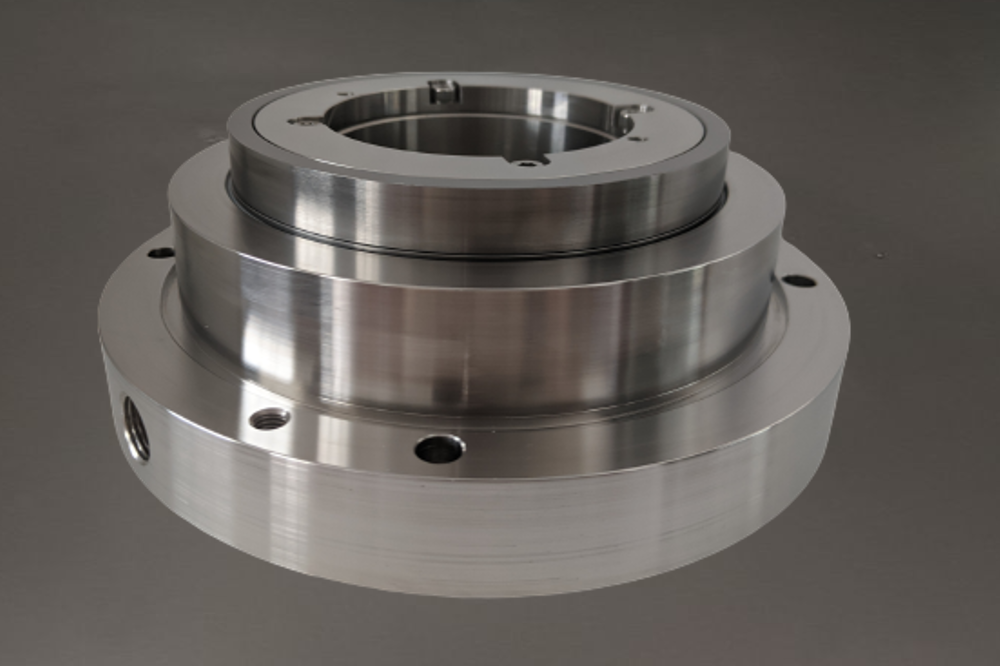
AS-C418 seal is customized single cartridge mechanical seal made as per drawing

About Us:


Background Knowledge:
What are the characteristics of PTFE and silicon carbide in the manufacture of mechanical seals
(1)What are the characteristics of PTFE and its application
In the manufacture of mechanical seals, polytetrafluoroethylene is a common material for making seal rings. What are its characteristics and in which working conditions are this type of materials used?PTFE has good corrosion resistance. Its chemical stability is the best among known plastics, so it is known as the"King of Plastics". It is resistant to the corrosion of almost all strong acids, alkalis and strong oxidants. It has been found that only molten alkali metal (or its ammonia solution), elemental fluorine and chlorine trifluoride can react with polytetrafluoroethylene at high temperature. The molecular structure of polytetrafluoroethylene determines that the surface molecules are easy to roll and slide with each other, so when polytetrafluoroethylene is rubbed against other materials, its molecules are first transferred to the mating material, forming a layer on the surface of the mating material a thick film of about 0.02~0.03μm ,so it is an excellent anti-friction, self-lubricating material. PTFE has a low coefficient of friction, its dynamic and static friction coefficients are both 0.04, and its friction coefficient when rubbed against a metal mirror is 0.09~0.12.PTFE has high heat resistance and cold resistance, the service temperature is -18~250°C, and it has good water resistance, aging resistance, non-combustibility, toughness and processing performance.
PTFE also has some disadvantages, and the scope of use in making mechanical seals is limited. The biggest disadvantage is cold flow, that is, creep occurs under load; in addition, the linear expansion coefficient is very large, in the range of 8×10¯5~25×10¯5 1/℃, the values at different temperatures are shown in the figure below , understanding this property is meaningful for temperature control during storage and processing.
Item | Unit | Value |
density | g/cm3 | 2.1—2.2 |
water absorption | % | <0.005 |
Tensile strength (unquenching) (Quenching) | MPa MPa | 13.7—24.5 15.7—31 |
Elongation (break) | % | 250—350 |
Bending strength | MPa | 10.8—13.7 |
Hardness | Hb | 50—65 |
Coefficient of friction (for steel) dynamic & static | 0.04 0.04 | |
Linear expansion coefficient(25—200 ℃) | 1/℃ | (10-12)×10-6 |
Thermal Conductivity | W/m·K | 0.24 |
(2)The characteristics of silicon carbide and what should be paid attention to
Silicon carbide is a new type of ceramic, and it is the best friction pair material found so far, with various excellent properties such as physical properties, thermal properties and chemical properties, and even radiation proof properties are no exception. In terms of adhesive performance, silicon carbide forms a protective film of silicon oxide, which is wettable by most liquids. The thermal conductivity of silicon carbide is 10 times that of aluminum oxide. These properties, combined with its exceptional hardness, give it a very long service life both on its own and on the abrasive material of mechanical seals Its corrosion resistance is very good. In strong oxidizing medium, it only reacts at a high temperature of 500~600°C, and it is resistant to almost all acids and alkalis.
The manufacturing methods can be divided into hot pressing sintering SiC, atmospheric pressing sintering SiC, reaction sintering SiC, chemical vapor reaction SiC (also known as siliconized graphite) and chemical vapor deposition SiC. The first three are monolithic silicon carbide, and the latter two are SiC coatings formed on the graphite surface. The different performances created by the three different manufacturing methods are as follows:Atmospheric pressing sintering SIC and hot pressing sintering SiC both have a density of over 97% while reaction sintering SiC has a certain amount of free silicon and pores; chemical vapor deposition SIC and chemical vapor reaction SiC both have a surface layer of SiC and a substrate of graphite. Their common feature is that the end faces of the friction pair of the mechanical seals are dense and extremely hard SiC. Their performances are shown in the following two figure.
Send Message
Related Products