Español
 Pусский


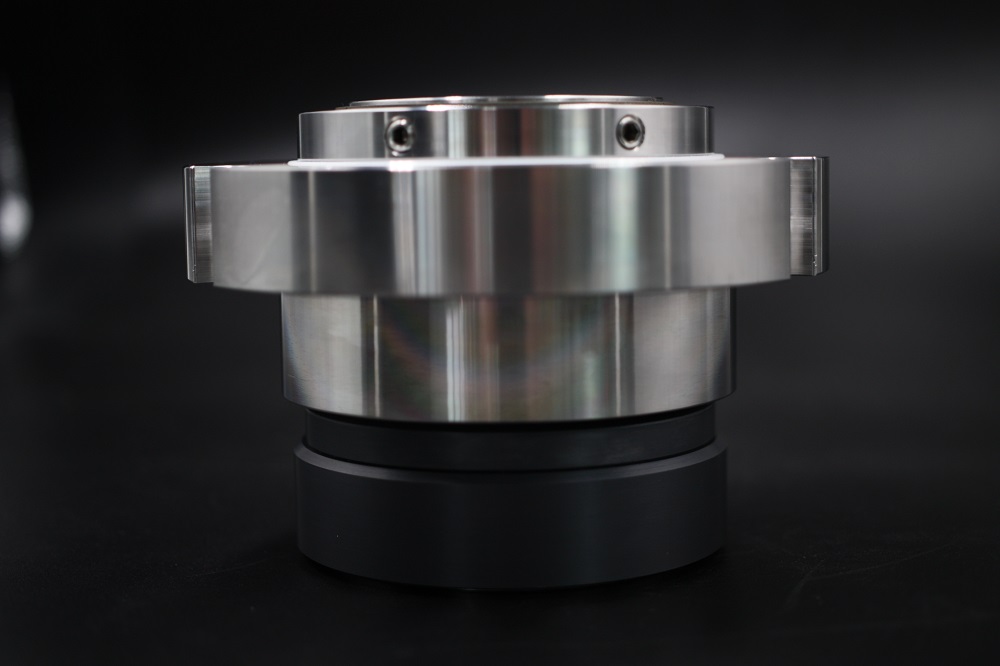
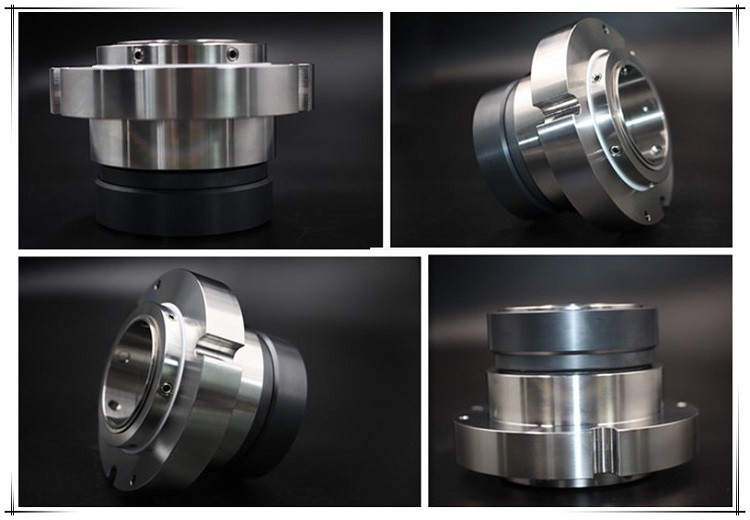
THis seal is customized single cartridge mechanical seal.
About Us:
Asinoseal can be your first choice when you need mechanical seals. We are a leading manufacturer in fluid sealing field with over 10 years history. Our partners include BASF, DuPont, Wacker, Sinopec and other famous multinational enterprises. With various types of mechanical seals available, Agitator seals, Cartridge seals are still our main focus, meanwhile pump shaft sleeve and sealing sytem are also popularly made here. No matter which brand your old seal is, you can always come here to get seal service.
Background Knowledge:
How many friction states between rotary face and stationary seat do mechanical seals have
Mechanical seals working in liquid media generally rely on liquid films formed between rotary faces and stationary seats by liquid media for lubrication. Therefore, maintaining liquid films between friction surfaces is essential to ensure stable operation of mechanical seal and prolong its service life.
Friction between rotary face and stationary seat of mechanical seal will appear as follows according to different conditions:
(1)Dry friction:
There is no liquid entering on sliding friction surface, so there is no liquid film but only dust and oxide layers, and adsorbed gas molecules. When rotary face and stationary seat are running, the result must be that friction surfaces are heated and wear is aggravated, resulting in leakage.
2) Boundary lubrication:
When pressure between rotary face and stationary seat increases or ability of liquid to form a liquid film on friction surfaces is poor, the liquid will be squeezed out from the gap.
Since surface is not absolutely flat, but uneven, there will be contact wear on convex points, while lubricating performance of liquid is maintained on the concave points, resulting in boundary lubrication. The degree of wear and heat generation for boundary lubrication is moderate.
(3) Semi-liquid lubrication:
There is liquid in the pit on sliding surface, and a thin liquid film is maintained between contact surfaces, so heating and wear conditions are good for this mechanical seal. Because the liquid film between rotary face and stationary seat has surface tension at its exit, Therefore, the leakage of liquid is limited.
(4) Complete liquid lubrication:
When pressure between rotary face and stationary seat is insufficient, and the gap increases and the liquid film thickens, there is no solid contact at this time, so there is no friction.
However, due to existence of large gap between rotary face and stationary seat in this case, leakage is serious thus sealing effect cannot be achieved. This situation is generally not allowed in practical applications (except for controlled membrane mechanical seals).
Most of working conditions between rotary faces and stationary seats of mechanical seals are in state of boundary lubrication and semi-liquid lubrication, while semi-liquid lubrication can obtain the most satisfactor results when the friction coefficient is the smallest, that is, the wear and heat generation are the smallest,while sealing effect is the best.
Send Message
Related Products