Español
 Pусский


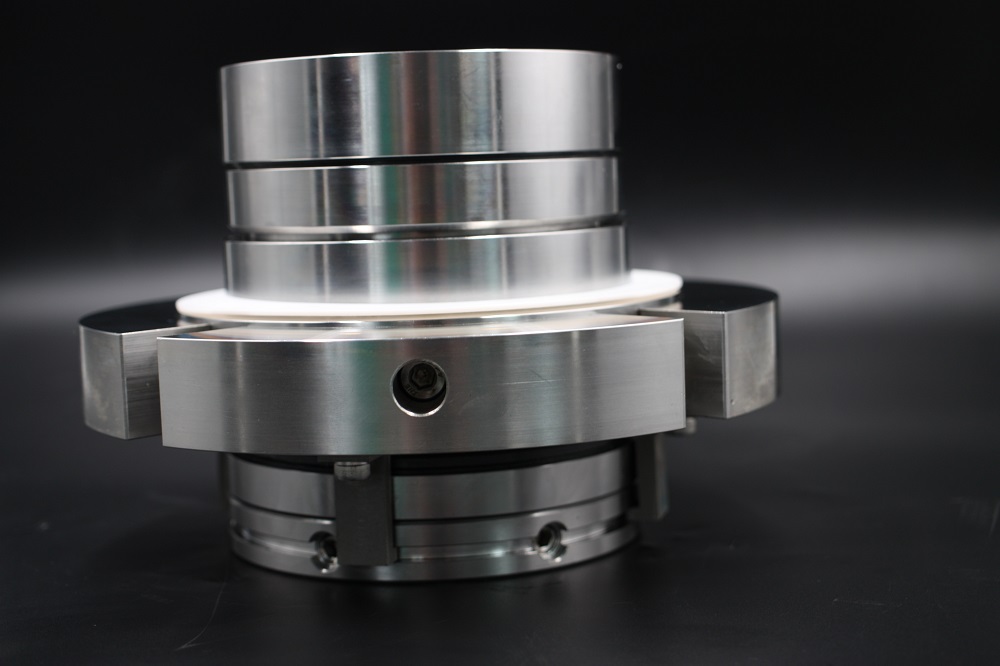
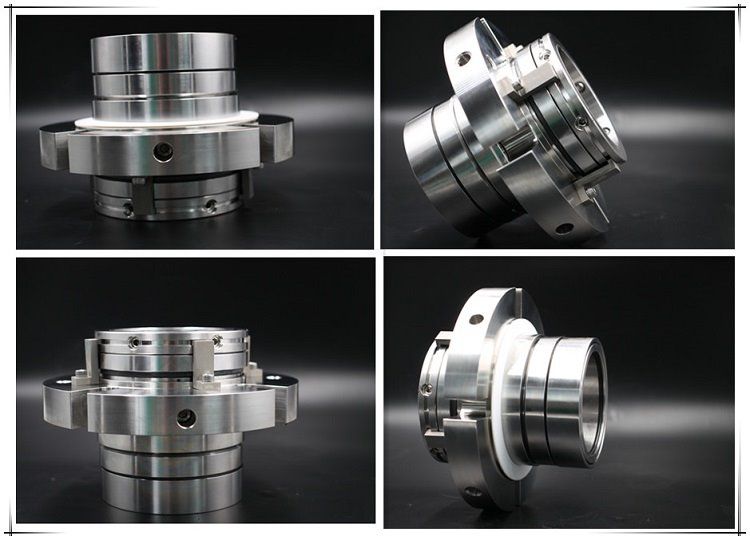
This seal is dual cartridge mechanical seal. AS-CSB2 heavy-duty dual cartridge mechanical seal is to replace Johncrane Mechanical seal type Type SB2. Its double-balanced design allows the reliable performance and long life of the seal in the most harsh conditions. The Type CSB2 seal is perfect for use with environmentally damaging and abrasive fluids, most frequently used in pumps in pulp factories, minerals processing and other slurry duties up to 40 percent solids by weight and a solids hardness of 8 Mohs. The Type CSB2 seal is widely used with other process equipment including agitators.
Parameters:
TEMPERATURE LIMITS
350°F/180°C
PRESSURE LIMITS
Process pressure: 290 psi(g)/20 bar(g)
Barrier fluid: 215 psi(g)/15 bar(g)
SPEED LIMITS
65fps/20m/s
Material Combinations:
Seal faces: SiC/Carbon or SiC/SiC
O-rings: PTFE, EPDM, Viton, FFKM
Metals: AISI 329 and 316 standard, titanium, Hastelloy, UHB, 904, SAF 2507 for sea water applications
Springs: Nimonic steel
Features:
Seal faces are installed using a patented heat shrink process permitting right, no-distortion face alignment at all suggested temperatures.
The springs are fitted in the stationary unit of the mechanical seal in the seal water (as barrier fluid). The springs are washed by the seal water, preventing process chemical corrosion and decreases the risk of the springs becoming clogged. Shaft misalignment does not shake or make the O-rings worn out.
PTFE slot rings replace the traditional O-rings in places where they are exposed to the product, preventing sticking.
Face designs preventing metal stress from distorting the face.
Patented double-balanced design allows the use of both pressurized and unpressurized seal water (barrier/buffer fluid) and refrain from face overload.
CSB2 series seals will accept ± 0.080"/± 2.0mm axial movement (shaft end play) during normal operation due to their piston design. Any adjustments about impellor do not affect face stress or spring strength.
Recommended Applications:
Process pumps
Other rotating equipment
About Us:
Background Knowledge:
Testing Technology of End-face Friction Torque
The end face friction characteristics of mechanical seals are the key factors that determine the working life and sealing performance of mechanical seals. The performance parameters directly related to the end face friction characteristics of mechanical seals mainly include end face friction torque and so on.
The following briefly talks about the test technology of the friction torque of the mechanical seal end face. At present, the technology mainly includes support-reaction method and transfer method.
The support reaction force method is to measure the friction torque according to the change of the support reaction force generated by the power machinery under the action of torque. The advantages are that there is no problem of signal transmission from the rotating part to the stationary part, and the method for determining the reaction force of the support is simple and easy to implement. EMayer, Li Kun, etc. used the support-reaction force method to measure the friction torque of the mechanical seal end face. A force-measuring rod is arranged on the rotatable sealing cavity, and makes it act on the force sensor, thereby measuring the torque. However, the friction of the rotary support in the sealed cavity will affect the test accuracy, so the requirements for the rotary support are extremely high. Li Kun used aerostatic bearings.
The transmission method measures torque according to the changes in physical parameters produced by elastic elements when transmitting torque. The instrument using the transmission method to measure torque is small and light, and the torque sensor can be directly connected to the transmission system without changing the mechanical system structure. JASilvaggo, Song Pengyun, Zhao Zengshun, etc. install a torque sensor between the motor and the sealing spindle, measure the torque of the rotating shaft, and subtract the friction torque of the main bearing and the stirring torque of the rotating parts in the medium from the measured torque during no-load operation. Thus the mechanical seal end face friction torque can be obtained.
Send Message
Related Products