Español
 Pусский


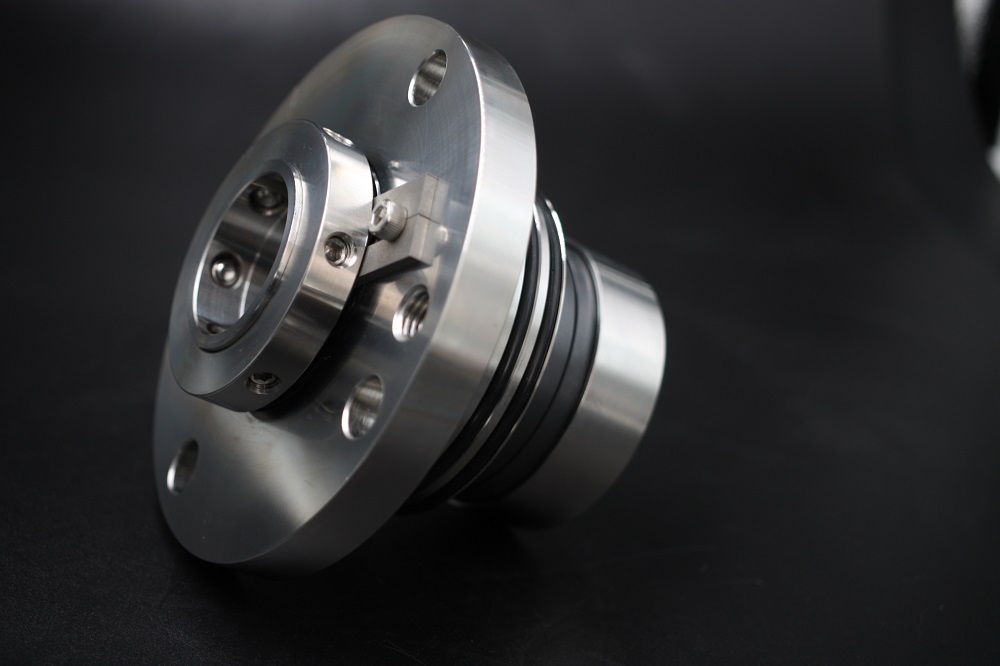
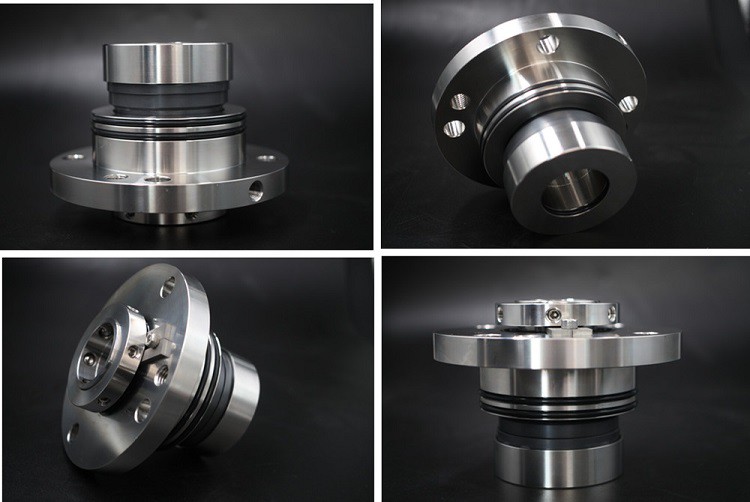
This seal is customized single cartridge mechanical seal.
About Us:
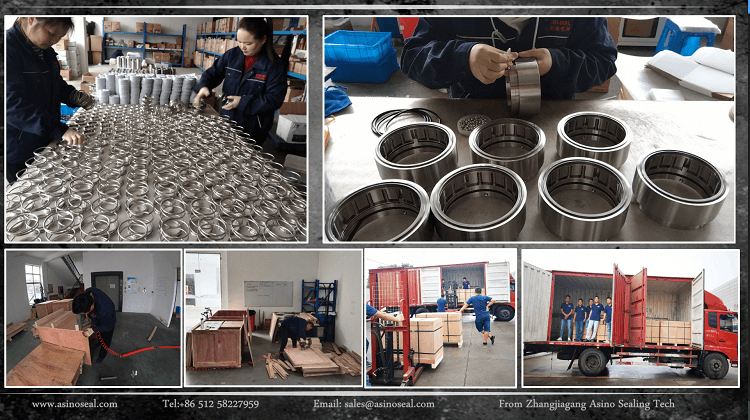
Background Knowledge:
Case analysis of mechanical seal failure of an alkali pump in the industry
Failure analysis:
The GA-203 pump in the pyrolysis workshop of the company is the bottom circulation pump of the DA-203 tower, which transports the lye with a high concentration after being washed by the pyrolysis gas to the top of the tower for recycling. The pump was running well at the beginning of operation, but after a period of time, leakage often occurred, and the frequency of maintenance increased, which increased maintenance costs and product costs, and affected the long-term stable operation of the device. This was of course the problem of its mechanical seals.
Cause Analysis:
Generally, there are four main forms of mechanical seal failure, namely corrosion, heat loss, wear, and failure caused by factors such as installation and operation. After the pump was disassembled, there were no scratches and wear on the sealing surface of the mechanical seal, so the cause of physical damage to the sealing surface can be ruled out.Considering that there are many crystals and scales in the sealing chamber, combined with many manifestations of mechanical seal failure, it is preliminarily determined that the easy crystallization and corrosion of the transported medium are the main causes of mechanical seal failure.
Solutions:
1.Shift of the structure of the elastic element from a spring to a bellows:The bellows is both an elastic element and an auxiliary sealing ring for the rotary face of the mechanical seal. The O-ring between the rotary face and the shaft sleeve is omitted. The sole measure of adding a gasket to seal the material at the end of the rotary face seat can not only solve the contradiction problem between sealing and compensation of the same O-ring , but also changes the original quasi-static seal to a complete static seal , so that the reliability of the mechanical seal is improved.
The adoption of bellows also saves the transmission pin of the spring mechanical seal and the mating surface between the rotary face and the rotary face seat, avoids the failure of the rotary face caused by the deposition of solid particles, and further improves the overall performance of the mechanical seal. The bellows provide both elastic compensation and torque, and have better tracking and compensation capabilities.
2.Stationary seat compensation replaces rotary face compensation: in the mechanical seal assembly, the mass of the rotary face is much larger than that of the stationary seat, so the rotational momentum is also larger for rotary face during operation of the mechanical seal. After changing to stationary seat compensation, the rotational momentum is reduced, and the stability and reliability of the entire mechanical seal assembly are improved.
3.Increase the gap between the rotary face and the shaft sleeve: increasing the gap can avoid the deposition of crystals and scales. It is acceptable to increase the inner diameter of the rotary face or reduce the inner diameter of the shaft sleeve under the premise of ensuring the specific pressure of the end faces of the mechanical seal. According to relevant data recommendation, increase the gap from the original 0.38mm to 0.5mm.
4.Appropriately increase the aperture of the flushing line: In view of the actual situation with more crystals and scales, increasing the flushing volume of the mechanical seal can effectively solve the deposition of solid particles, so the aperture of the original flushing line must be increased from 12.7mm to 19.05mm. It should be noted, however, that increasing the pore size too much will reduce the efficiency of the pump.
5. Increase the mesh number of the inlet filter: increasing the mesh number of the filter can effectively prevent solid particles from entering the sealing chamber, and provide an ideal working environment for the mechanical seal.
Send Message
Related Products