Español
 Pусский
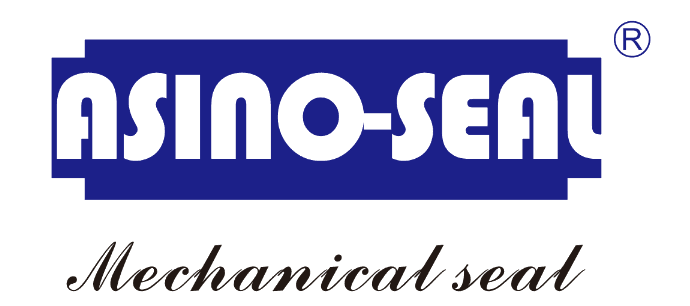


Single cartridge mechanical seal AS-C460 is customized single seal.

About Us:


Background Knowledge:
What do the auxiliary sealing rings materials of the mechanical seals include
The auxiliary sealing rings of the mechanical seal include the auxiliary seals of the rotating sealing ring and the auxiliary seal of the non-rotating ring, as well as the seal between the end cover and the sealing cavity, and the seal between the shaft sleeve and the shaft of the mechanical seal. From the shape of the end faces of the mechanical seal, there are O-rings, square rings (pads), flat pads, V-shaped pads, wedge-shaped pads, wrapped pads, wrapped O-rings, etc.
According to the role of the auxiliary sealing ring it plays, the auxiliary sealing ring materials of the mechanical seal are required to have good elasticity, low friction coefficient, corrosion resistance to the medium, dissolution and swelling resistance, aging resistance, and small permanent deformation after compression and long-term work. They are also required to have non-adhesiveness when used at high temperature, and not hard and brittle and loses elasticity at low temperature, and has certain strength and compression resistance.
1.Synthetic rubber
Rubber is a polymer material with good elasticity. It has good elasticity and certain strength.It has good air tightness, impermeability, wear resistance, temperature resistance, pressure resistance and corrosion resistance. It is widely used Auxiliary sealing materials adopted by mechanical seals.
As a kind of widely used auxiliary sealing materials, attention should be paid to the selection of different types of rubber for they have different degrees of corrosion resistance, solvent resistance and temperature resistance properties.Synthetic rubbers commonly used for auxiliary seals of mechanical seals include nitrile rubber (NBR), fluororubber (FPM), ethylene-propylene rubber (EPM), and silicone rubber.
1.1Nitrile rubber
Nitrile rubber is the most commonly used auxiliary sealing ring material of mechanical seals. It is famous for its excellent oil resistance and aging resistance, and also has good wear resistance.The performance of nitrile rubber is related to the content of acrylonitrile. Higher acrylonitrile content leads to good oil resistance, increased strength, hardness, wear resistance and water resistance, but poor corrosion resistance, elasticity and low temperature resistance. Auxiliary sealing rings generally use nitrile rubber with medium and high acrylonitrile content (acrylonitrile content is 26¯40%, namely nitrile-26, nitrile-40), especially nitrile-40 rubber is the most widely used, but in working conditions where low temperature is the usual case type of nitrile rubber should be nitrile-26 rubber.Nitrile rubber has excellent corrosion resistance to mineral oil, animal and vegetable oil, and aliphatic hydrocarbons, but it is worth noting that it is not resistant to phosphate ester hydraulic oil, strong acids, aromatics, esters, ketones, ethers, halogenated hydrocarbons, etc. Corrosion of the medium.
1.2 Fluorine rubber
Commonly used and the mostly produced fluororubber in mechanical seals production is fluorine containing olefin copolymer,. There are two types, namely 23-type and 26-type fluororubber. Type 23 fluororubber is a copolymer of vinylidene fluoride and chlorotrifluoroethylene. It has excellent resistance to strong acids, especially fuming nitric acid, but it is difficult to process. Type 26 fluororubber is currently the most common variety of fluororubber. In order to adapt to various purposes, there are many brands of fluororubber, but the basic varieties are fluororubber-26 and fluororubber-246.
1.3 Ethylene Propylene Rubber It has excellent aging resistance and heat resistance, and can be used for a long time at 150°C with slow changes in physical and mechanical properties. It has good wear resistance and corrosion resistance, but has poor stability to hydrocarbon oils, so it cannot be used in mineral oils. If the mechanical seal is installed with the help of grease and lubricating oil, the influence of this factor must also be considered. However, it is particularly resistant to silicone oil, phosphate ester hydraulic oil, synthetic lubricants, ketones, alcohol solutions, medium-strength acids and alkalis, and is also resistant to high-pressure water vapor.
1.4 Silicone Rubber
It has a wide temperature range (-100¯350°C) and high thermal stability, and can generally be used for a long time at 200¯300°C. Silicone rubber is non-toxic, odorless, and has no adverse effects on the human body, but has poor solvent resistance, and is prone to ionic cracking under the action of acid and alkali, and will decompose in high-pressure water vapor, with low mechanical strength and no wear resistance. It is mainly used for various mediums such as animal and vegetable oils, mineral oils, oxygen, weak acids, weak bases, etc. under high, low temperature, high speed rotation, etc. It is not suitable for solvent media such as benzene, toluene, acetone, etc., nor is it suitable for high pressure water vapor
2.Polytetrafluoroethylene (PTFE)
PTFE is resistant to the corrosion of almost all strong acids, strong alkalis and strong oxidants; because of its low friction coefficient, it is an excellent anti-friction and self-lubricating material for mechanical seals, but its thermal conductivity is very poor, only 0.244W/( m.K). Adding bronze powder, molybdenum disulfide, graphite, etc. can improve its thermal conductivity and self-lubrication. PTFE has high heat resistance and cold resistance, and the operating temperature range is -180¯250°C. Water resistance, aging resistance, non-combustibility, toughness and processing performance are all very good. It is often made into a V-ring as an auxiliary seal for rotating and non-rotating rings of mechanical seals.
In addition, PTFE can be used to coat other materials, such as PTFE-coated stainless steel and PTFE-coated rubber to form a composite material auxiliary seal for mechanical seals. Because they combine the advantages of two or more materials, they have Better sealing effect.
3.Flexible graphite
It not only has the excellent thermal stability, chemical stability and high thermal conductivity of ordinary graphite, but also has unique compressibility and resilience. It can withstand high and low temperatures. When the temperature of the conveying medium is not lower than 200°C, the auxiliary sealing material should preferably use flexible graphite for the better sealing effects of mechanical seals. However, the strength of flexible graphite is low, and attention should be paid to strengthening and protecting it.
Flexible graphite molded into rectangular rings, wedge rings, and gaskets is often used for mechanical seal non-rotating ring auxiliary sealing rings, rotating ring auxiliary sealing rings, and static gaskets for the connection between bellows components and shaft sleeves for metal bellows mechanical seals.
4.Metal material Under high pressure, especially when high pressure and high temperature exist at the same time, the above-mentioned materials are not competent. At this time, only metal materials are used to make auxiliary seals of the mechanical seals. According to different working conditions, there are different metal materials for selection. The metal hollow O-ring materials include OCr18Ni9, OCr18Ni12Mo2Ti, 1Cr18Ni9Ti, etc. For wedge-shaped gaskets with triangular end faces, chrome steel is often used, such as OCr13. For flat pads, copper or aluminum pads are mostly used.
Under the condition of high pressure and high temperature, the strength and elastic modulus of the above materials will decrease obviously, and heat-resistant alloys such as Inconel should be used at this time.
Send Message
Related Products