Español
 Pусский


AS-C542 cartridge seal is customized single seal with multiple spring that made as per client drawing.
Basic information:
Model: | AS-C542 | Size: | 48mm |
Structure: | Multiple spring | Type: | Single seal |
Pressure: | Medium pressure mechanical seal | Speed: | General Speed Mechanical Seal |
Temperature: | High Temperature Mechanical Seal | Standard: | standard |
Balance: | Balance | Appliaction: | Pump |
MOQ: | 1 set | Transport package: | Carton or wooden case |
HS code: | 8484200090 | Origin: | Zhangjiagang,China |
Combined Materials :
Rotary face material: | SSIC | Stationary face material: | Anti-car |
Spring material: | Hast-C | Secondary seal: | VITON |
Metal parts: | Super Duplex 2507 | Other: |
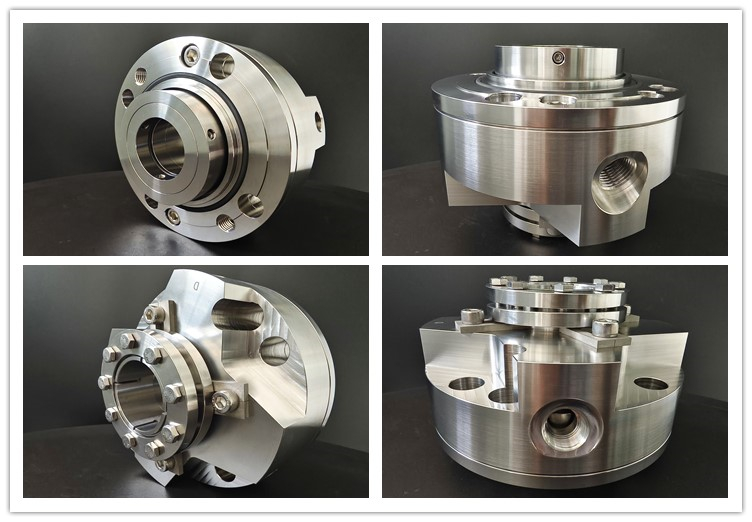
- Multi spring compensation performance is good, and the end face load is uniform
- Composite transmission has lower friction damping and more uniform transmission force
- The positioning and installation of the fastening screw are simple and easy to adjust
2.Material
We can provide materials not mentioned above to meet the requirements of different occasions. If needed, please contact Asino company
3. Aplications
Oil and gas, chemical, metallurgical, pharmaceutical, food, water treatment
4. Background
Summarize different types of pump seals and provide selection comparisons.
A、 Classification and summary of different types of pump seals according to sealing principles
Packing seal, mechanical seal, power seal, leak free pump seal (magnetic pump/shielded pump), lip seal/oil seal, labyrinth seal, dry gas seal
B、 Internal reclassification of mechanical seals
Single end mechanical seal: with only one pair of friction pairs, simple structure, used for general non hazardous media.
Double end mechanical seal: There are two pairs of friction pairs, with isolation liquid or gas in the middle, high safety, used for highly toxic, flammable, valuable, and high-risk media.
Containerized mechanical seal: pre installed as a whole at the factory, directly installed on site, reducing installation errors and shortening downtime.
Non containerized mechanical seals: installed and adjusted piece by piece on site, with low cost but high requirements for installation technology.
Balanced mechanical seal: unloads partial medium pressure, suitable for high-pressure working conditions.
Unbalanced mechanical seal: capable of withstanding all medium pressures, with a simple structure, suitable for low-pressure conditions.
Spring type mechanical seal: a common design, but the spring and auxiliary seal may be affected by particles and crystals.
Bellows mechanical seal: No sliding auxiliary seal, suitable for high temperature, easy crystallization, and corrosive media.
C、 Comparison of selection of different types of pump seals
Require low cost, resistance to impurities, and acceptance of dripping, with priority given to packing sealing.
Require low leakage, long lifespan, and general industrial pump applications, with priority given to mechanical seals.
High pressure, high-risk, valuable media, safety priority are required, and double end mechanical seals or containerized mechanical seals are given priority consideration.
The medium is abrasive slurry, and it is required to have almost no leakage during operation. Power sealing can be considered, but it should be matched with parking sealing.
Require intrinsic zero leakage, consider magnetic pumps or shielded pumps.
Lip seals/oil seals are an economical choice for protecting bearings, low pressure, and lubricating media environments.
High speed, non-contact auxiliary sealing, and labyrinth sealing are more suitable.
High leakage control, gas medium or high reliability are required, and dry gas sealing can be considered.
The overall selection logic for different types of pump seals is: first, check whether the medium is high-risk, whether it is abrasive, whether it is lubricated, then look at the pressure and temperature boundaries, and finally weigh the initial cost and full lifecycle maintenance cost. There is no absolute best pump seal, only the type that best matches the operating conditions.
Send Message
Related Products