Español
 Pусский


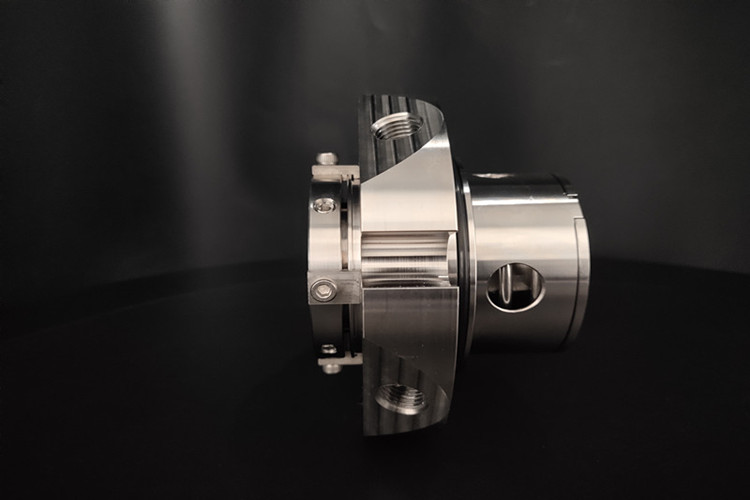
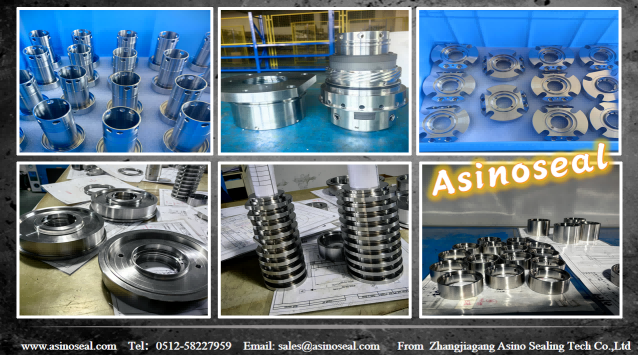
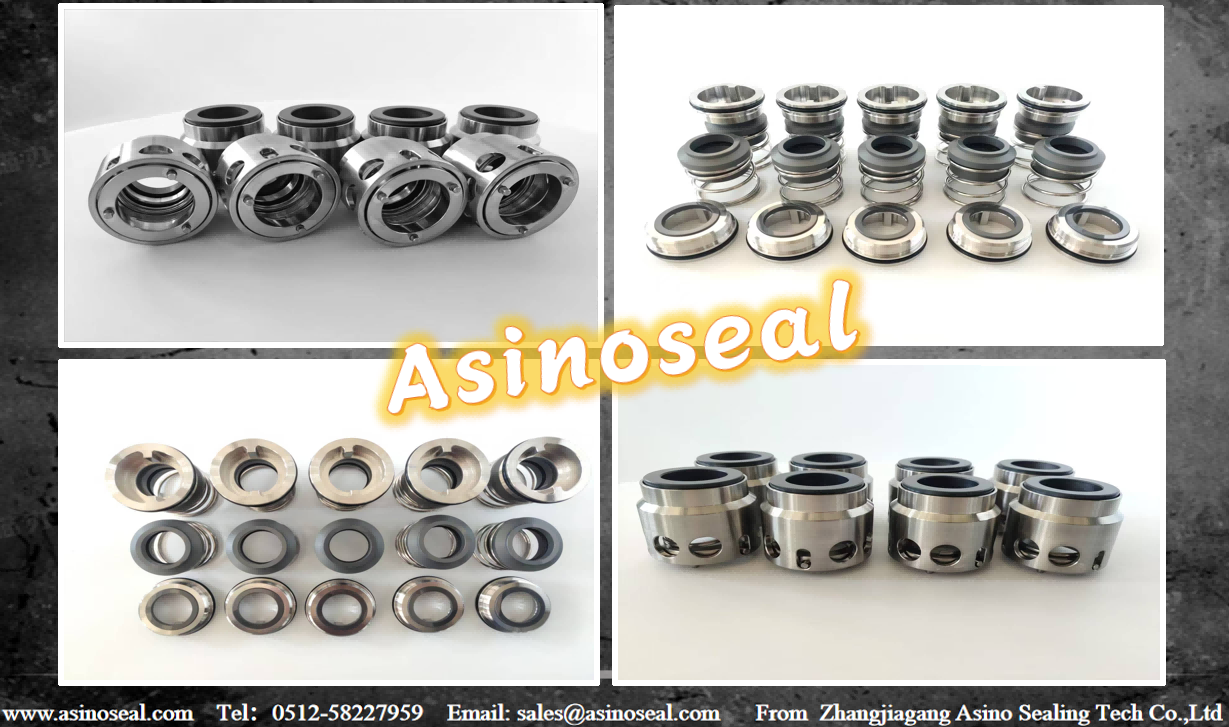
AS-C468 Single Cartridge Seal with Single spring is customized seal made as per client drawing.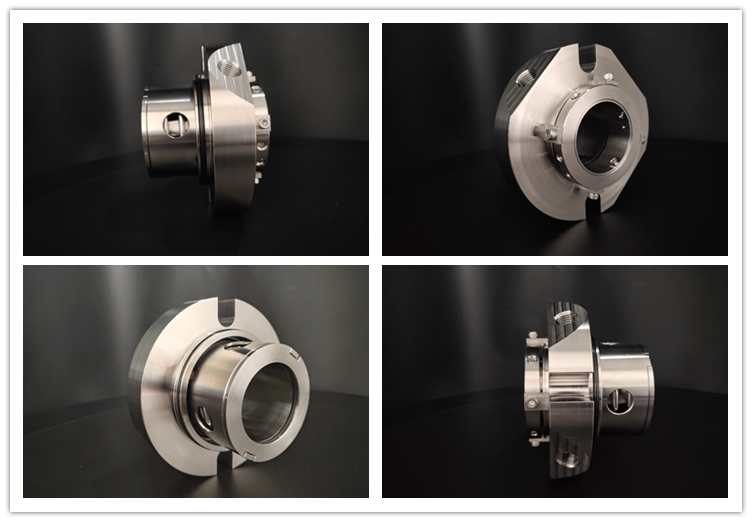
About us:
Background:
Mechanical seal and packing seal are two common sealing methods, which differ in multiple aspects. The specific comparison is as follows:
1.seal principle
Packing seal: also known as compression packing seal or packing seal, mainly relies on the frictional force generated by the compression force of the packing between the shaft and the packing box to achieve sealing. Fillers are usually made of fibrous materials such as graphite, asbestos, carbon fiber, etc., which have certain elasticity and self-lubricating properties.
Mechanical seal: It is a shaft seal device that relies on two relatively sliding end faces (a moving ring and a stationary ring) to maintain contact under fluid pressure and compensation mechanisms (such as springs or magnetic forces), and is equipped with auxiliary seals (such as O-rings) to achieve leakage prevention. The end face of mechanical seals is usually coated with wear-resistant materials to reduce friction and wear.
2.Structural composition
Packing seal: mainly composed of packing, packing box, and packing fixing parts. Common packing materials include asbestos fabric, carbon fiber, rubber, etc.
Mechanical seal: The main components include a moving ring, a stationary ring, a cooling device, and a compression spring. It consists of a static ring, a dynamic ring, a compensating buffer mechanism, an auxiliary sealing ring, and a transmission mechanism.
3.sealing effect
Packing sealing: The sealing effect is relatively poor and the leakage is large. Especially under high pressure, high temperature, or corrosive media, leakage problems are more prominent. Packing seals allow for a small amount of lubricant loss to maintain the liquid film and carry away frictional heat, so there is usually a certain degree of leakage.
Mechanical seal: The sealing effect is better than packing seal, and the leakage is very small. Under normal operating conditions, the leakage of mechanical seals is usually only about 1/100 of that of packing seals. The end face of the mechanical seal can maintain a good fitting state, and even under high pressure, high temperature, or corrosive media, it can maintain a low
leakage rate.
4.Applicable scenarios
Packing seal: suitable for low speed, low shaft seal leakage requirements, and its maximum pressure can generally reach 30MPa. Commonly used in reaction vessels under normal or low pressure conditions, as well as stirring equipment with non corrosive or weakly corrosive media. It can also be used to transport general media such as water.
Mechanical seal: Suitable for high speed and low requirements for shaft seal leakage, its operating pressure generally does not exceed 6.3 MPa. Commonly used in reaction vessels under moderate pressure or vacuum conditions, as well as in situations where the medium is high or low temperature, flammable, explosive, and toxic. Suitable for transporting petroleum and chemical media, it can be used for various media with different viscosities, strong corrosiveness, and particle content.
When choosing a sealing method, a reasonable selection should be made based on specific working conditions and requirements.
1.seal principle
Packing seal: also known as compression packing seal or packing seal, mainly relies on the frictional force generated by the compression force of the packing between the shaft and the packing box to achieve sealing. Fillers are usually made of fibrous materials such as graphite, asbestos, carbon fiber, etc., which have certain elasticity and self-lubricating properties.
Mechanical seal: It is a shaft seal device that relies on two relatively sliding end faces (a moving ring and a stationary ring) to maintain contact under fluid pressure and compensation mechanisms (such as springs or magnetic forces), and is equipped with auxiliary seals (such as O-rings) to achieve leakage prevention. The end face of mechanical seals is usually coated with wear-resistant materials to reduce friction and wear.
2.Structural composition
Packing seal: mainly composed of packing, packing box, and packing fixing parts. Common packing materials include asbestos fabric, carbon fiber, rubber, etc.
Mechanical seal: The main components include a moving ring, a stationary ring, a cooling device, and a compression spring. It consists of a static ring, a dynamic ring, a compensating buffer mechanism, an auxiliary sealing ring, and a transmission mechanism.
3.sealing effect
Packing sealing: The sealing effect is relatively poor and the leakage is large. Especially under high pressure, high temperature, or corrosive media, leakage problems are more prominent. Packing seals allow for a small amount of lubricant loss to maintain the liquid film and carry away frictional heat, so there is usually a certain degree of leakage.
Mechanical seal: The sealing effect is better than packing seal, and the leakage is very small. Under normal operating conditions, the leakage of mechanical seals is usually only about 1/100 of that of packing seals. The end face of the mechanical seal can maintain a good fitting state, and even under high pressure, high temperature, or corrosive media, it can maintain a low
leakage rate.
4.Applicable scenarios
Packing seal: suitable for low speed, low shaft seal leakage requirements, and its maximum pressure can generally reach 30MPa. Commonly used in reaction vessels under normal or low pressure conditions, as well as stirring equipment with non corrosive or weakly corrosive media. It can also be used to transport general media such as water.
Mechanical seal: Suitable for high speed and low requirements for shaft seal leakage, its operating pressure generally does not exceed 6.3 MPa. Commonly used in reaction vessels under moderate pressure or vacuum conditions, as well as in situations where the medium is high or low temperature, flammable, explosive, and toxic. Suitable for transporting petroleum and chemical media, it can be used for various media with different viscosities, strong corrosiveness, and particle content.
When choosing a sealing method, a reasonable selection should be made based on specific working conditions and requirements.
Send Message
Related Products

Model NO. AS-C541

Model NO. AS-C540

Model NO. AS-C539

Model NO. AS-C538

Model NO. AS-C537

Model NO. AS-C536

Model NO. AS-C535

Model NO. AS-C534