Español
 Pусский


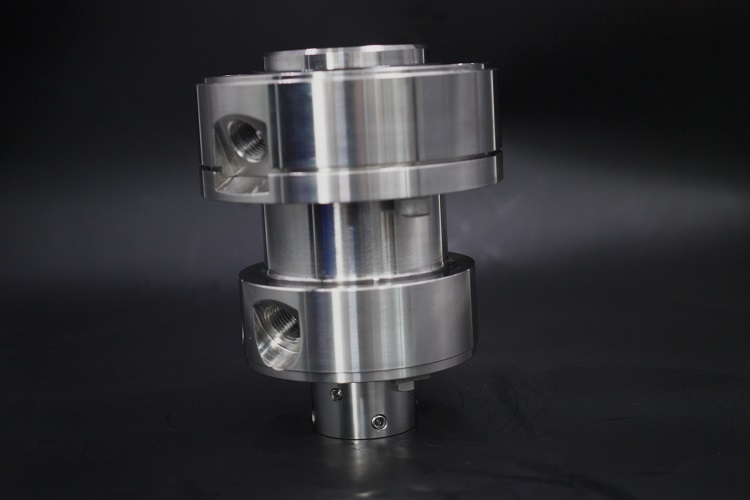
AS-C464 double cartridge mechanical seal is customized dual seal in cartridge form

About Us:


Background Knowledge:
Improvement and optimization of ACO pump mechanical seal cooling water system in CPR1000 project
In view of the design issues found during the installation and commissioning of the CPR1000 nuclear power project equipment in the ACO pump mechanical seal, such as seal wear and the mixing of the external flushing water of the flushing cooling water system with the equipment transmission medium, through engineering practice, a solution to the cooling of this type of ACO pump seal was proposed. Water system improvement and optimization plan, and the implementation of the improvement plan is discussed and summarized in detail, which provides certain reference for the subsequent transformation of the same project and related equipment.
I.Introduction
The shaft seal is one of the key components of shaft seal pumps, especially for pumps that transport hot media or corrosive or radioactive media. The safe operation of the shaft seal is one of the key guarantees for the safe operation of equipment and systems. At present, the shaft seal of pump equipment mainly adopts the form of mechanical seal. This type of component has good sealing performance and high technical requirements. It is one of the most vulnerable parts of pump equipment.
The ACO pump of the conventional island thermal system of the CPR1000 nuclear power plant is one of the key equipment in the low-pressure feed water heating system. It mainly performs the dewatering and collection of the 3rd and 4th-level low-pressure heaters, then boosts the pressure, and delivers it to the 3rd and 4th-level low-pressure condensation. Water pipelines are used to achieve the operation function of low-pressure water supply heating systems. They are typical pumps for transporting heat medium. The safety of its mechanical sealing system determines whether the equipment can operate safely and the thermal efficiency of the system.
Therefore, the selection and design of the ACO pump mechanical seal system is one of the key designs of the equipment. The mechanical seal cooling water system is the main determining factor in the thermal medium pump mechanical seal selection. If the mechanical seal selection and mechanical seal cooling water system design are unreasonable, , will seriously affect the operation of the equipment. In order to ensure the stable and safe operation of the equipment, it must be modified to meet the system operation requirements. The following is one of the examples of ACO pump seal selection and cooling water system modification for the conventional island low-pressure feed water heating system of a CPR1000 nuclear power plant. Through the implementation of this transformation plan, it not only solves the problem of wear of the mechanical seal wearing parts, but also avoids the mixing of external cooling water and equipment conveying medium.
This ACO pump adopts a vertical multi-stage bag structure. The first-stage impeller has double suction and radial guide vanes. The other impellers have single suction and radial guide vanes. The shaft end seal uses a mechanical seal. The lifting height of the rotor is adjusted by an adjusting nut.
The original mechanical seal selected is a single cartridge seal with two external flushing and cooling water interfaces. One is for flushing water on the working surface of the mechanical seal friction pair, and the other is for quenching water on the rear end face of the static ring of the mechanical seal. Flushing and cooling requirements for the machine seal working surface under normal operation and startup of the unit and under changing operating conditions.
3.Conclusion
Aiming at the two typical problems of media mixing and lip seal (oil seal) vulnerability in the ACO pump sealing system of the CPR1000 conventional island water supply heating system, the mechanical seal and its cooling water system, on-site water source conditions, and pump molding design were analyzed. After fully considering the principles of equipment safety, on-site system status, external water source conditions, availability of component supply, and minimizing the impact of physical modifications, and based on actual conditions, the above improvement and optimization plan was proposed. After this improvement, the original problems of the ACO pump mechanical seal and its cooling water system were solved, the system requirements were fully met, and the equipment was in good operating condition, which fully proved that this improvement and optimization was reasonable and correct. This improvement was implemented in response to on-site problems after the entity was completed. The improved good practices can be used as a reference for handling the same problems with similar or identical equipment and have practical significance.
Send Message
Related Products