Español
 Pусский


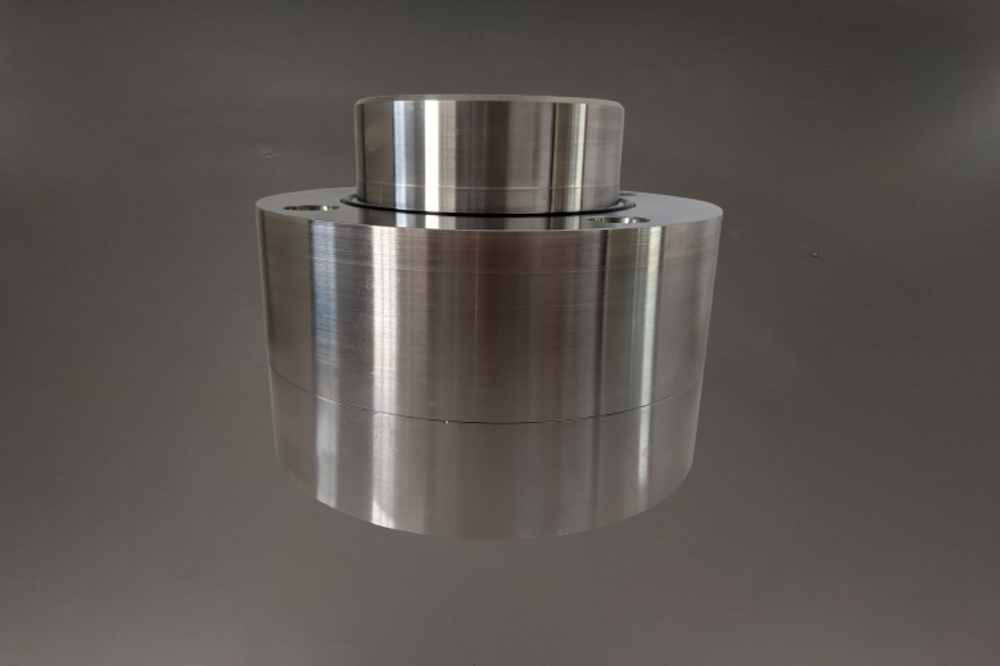
AS-C423 seal is customized double cartridge mechanical seal

About Us:


Background Knowledge:
【1】What synthetic rubber is commonly used to make auxiliary sealing rings of mechanical seals and what are their characteristics
Rubber is a polymer material with good elasticity. It has good elasticity and certain strength, and has good air tightness, water impermeability, wear resistance, temperature resistance, pressure resistance, and corrosion resistance. It is a widely used auxiliary sealing ring material in making mechanical seals.
Rubber is divided into natural rubber and synthetic rubber. Natural rubber is superior to synthetic rubber in terms of elasticity, strength, processing performance and comprehensive performance, but it is not as good as synthetic rubber in terms of temperature resistance, corrosion resistance, and dissolution resistance. Synthetic rubbers with different characteristics can be obtained by adopting different rubber varieties, formulations, mixing and vulcanization processes to make sealing rings of mechanical seals.
1)Nitrile rubber (NBR) Nitrile rubber is a copolymer of butadiene and acrylonitrile. Commonly used nitrile rubber with a propanonitrile content of 40% has good oil resistance and aging resistance, and has heat resistance, wear resistance and corrosion resistance, and is widely used in equipment contacting gasoline and other oils. It is also resistant to alkali and non-oxidizing dilute acids, but not to oxidizing acids (such as nitric acid and chromic acid, etc.), aromatic hydrocarbons, esters, ketones, ethers, halogenated hydrocarbons, etc. Because the condensed oil in the refinery contains aromatics and other media, nitrile rubber cannot be used in this case. It should not be used at low temperature also.
2)Silicone rubber (MVQ) Silicone rubber is a kind of linear polymer elastomer polymerized by dimethyl siloxane and other silicone monomers under the acidic (or basic) catalyst. Silicone rubber has a wide temperature range (-100~350°C) and high thermal stability, and can generally be used for a long time at 200~300°C. It is mainly used for sealing animal and vegetable oils, mineral oils, oxygen, weak acids and weak bases at high and low temperatures. Its disadvantages are low strength, non-wear resistance and high price.
3) Fluorine rubber (FPM) Fluorine rubber is a synthetic polymer elastomer containing fluorine atoms, which has the characteristics of high temperature resistance, oil resistance and corrosion resistance of various chemicals. At present, there are three varieties of fluororubber: FPM2301, fluororubber 23-11, which has excellent strong acid resistance; FPM2602, fluororubber 26-41, has better heat resistance and solvent resistance than FPM2301, but has poor process performance; FPM with 2461, that is, fluorine rubber 246, its heat resistance and solvent resistance are better than FPM2602. At present, the fluorine rubber used in the manufacture of auxiliary sealing rings of mechanical seals is mainly FPM2602.It can be used for a long time at 250°C and can be used for a short time at 300°C. Its corrosion resistance is the best among elastomers, but its low temperature performance is poor and its price is expensive, which limits its scope of use.
【2】What material is used to make the auxiliary sealing ring under high pressure
The auxiliary sealing ring of the mechanical seal is required to have good elasticity, low friction coefficient, corrosion resistance, dissolution and swelling of the medium, aging resistance, small permanent deformation after compression and long-term work, and non-adhesion when used at high temperature It is not hard and brittle and loses elasticity at low temperature, and has certain strength and compression resistance. Auxiliary sealing ring materials mainly use various rubber, polytetrafluoroethylene, flexible graphite and metal gaskets.
Rubber, PTFE, flexible graphite, etc. are only suitable for auxiliary sealing rings of mechanical seals used in general working conditions. Under high pressure, especially when high pressure and high temperature exist at the same time, they are not competent, so they have to be made of metal materials.
There are different metal materials for selection according to different working conditions of mechanical seals. Under high pressure, the commonly used materials for metal"0"rings are: Cr18Ni9, Cr18Ni12Mo2Ti, 1Cr18Ni9Ti and Cr18Ni11Nb, etc.; for metal sealing rings with a triangular cross-sectional shape, chrome steel is often used, such as 0Cr13; for some flat gaskets, copper is often used or aluminum pads. Under high pressure and high temperature conditions (such as above 400°C), the strength and elastic modulus of the above materials will decrease significantly, and heat-resistant alloys, such as Inconel or Inconel-x, should be used.
In addition to auxiliary sealing rings made of a single material, there are also sealing rings made of composite materials. For example, polytetrafluoroethylene wrapped stainless steel, polytetrafluoroethylene wrapped rubber, etc., have great potential for use due to their good sealing effect in the operation processes of mechanical seals.
Send Message
Related Products