Español
 Pусский

Ⅰ. Core technical features and structural optimization
definition
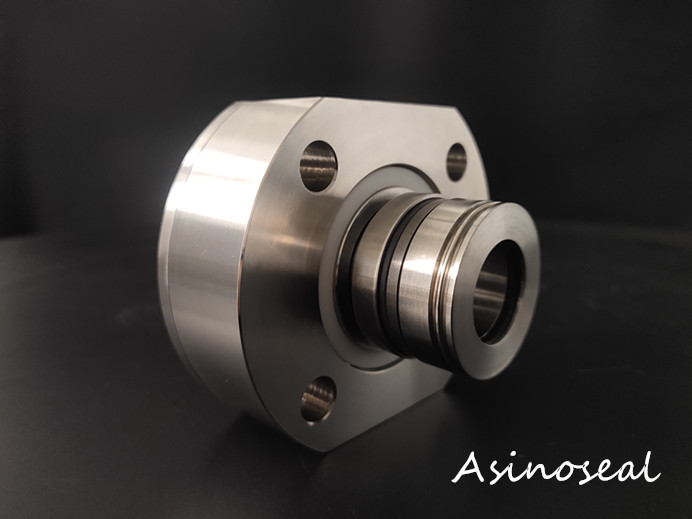
A single cartridge mechanical seal is a sealing device that pre-assembles a single sealing friction pair (rotating ring + stationary ring) with components such as the shaft sleeve, gland, and compensation mechanism into an integrated unit. It features convenient installation and compact structure.
Key facts and trends
1. Structural innovation: Compact design is achieved through modular design (such as split-type shaft sleeves and integrated compensation springs), which can fit the dimensions of most original pump seal cavities without requiring modification to the pump cover, reducing the cost of modification by over 30%.
2. Lubrication optimization: The design of the new oil injection component (oil storage chamber + lubrication hole) can continuously supply oil to the contact surface between the rotating ring and the shaft sleeve, reducing the wear rate by 40%.
3. Standardization compatibility: It complies with standards such as ISO 3069 and DIN 24960, and supports working conditions with a shaft diameter of ≤200mm, pressure of ≤4.0MPa (balanced type), and temperature of ≤280℃.
issue
Sealing reliability: The single design still poses a slight leakage risk in high-pressure (>4.0MPa) or toxic medium scenarios, and needs to be complemented by the application of double-end sealing.
II. Application Scenarios and Industry Adaptability
definition
It refers to the specific application scope and technical requirements of single cartridge mechanical seals in different media, working conditions, and industries.
Key facts and trends
1. Mainstream application areas:
General industrial pump: used for conveying oil, water, and low-corrosive acids and alkalis (with a fixed matter content of ≤20%);
Environmental protection equipment: desulfurization slurry circulating pump (gypsum/limestone slurry, temperature ≤180℃);
Chemical process: Sealing of stirring shafts for small and medium-sized reactors, compatible with 304/316L materials.
2. Restricted scenarios: From 2024 onwards, it will be prohibited for the transportation of toxic and flammable materials, promoting the substitution of double-end seals in high-risk chemical industries.
Data Case
After adopting a single cartridge mechanical seal for the desulfurization system of a coal-fired power plant, the annual maintenance frequency was reduced from 6 times to 2 times, resulting in a cost savings of 500,000 yuan for the modification of the sealing chamber.
III. Performance Comparison and Technical Substitution Relationship
definition
Comparative analysis of performance parameters and applicable scenarios between traditional split mechanical seals and double-end face seals.
Key facts and trends
1. vs Split-type seal: The installation time is reduced by 60% and the failure rate is reduced by 50% compared to the cartridge-type installation, but the initial procurement cost is 15%-20% higher.
2. vs Double-end face seal: No external sealing fluid system is required (saving 20% of energy consumption), but the risk of leakage increases in strongly corrosive and highly toxic media, necessitating auxiliary measures such as nitrogen barrier.
Industry perspective
Proponent: In scenarios involving medium to low flow rates and low-risk media, the single cartridge mechanicalseal design offers the best cost-performance ratio (with a market share of 65% according to data from a certain chemical equipment manufacturer);
Querying party: With stricter environmental protection requirements, the penetration rate of double-end seals in the field of VOCs treatment has increased by 12% annually.
IV. Policy supervision and market access
definition
Policies and constraints imposed by various countries on safety standards and elimination mechanisms for mechanical seals.
Key facts
1. Regulatory developments in China: In March 2024, single cartridge mechanical seals were included in the "Catalogue of Outdated and Hazardous Chemical Production Processes, Technologies, and Equipment to Be Phased Out", explicitly prohibiting their use for the transportation of toxic and flammable materials [1].
2. International standards: According to the EU ATEX certification requirements, single cartridge mechanical seals in explosion-proof areas must meet a leakage rate of <10ppm, driving material upgrades (such as perfluoroether rubber seals).
V. Material upgrading and lifespan enhancement technology
definition
The technical path to extend the service life of seals through material improvement and structural innovation.
Key trends
1. Main material: Super duplex stainless steel (2205/2507) replaces traditional stainless steel, with a 2-fold improvement in corrosion resistance, suitable for media containing chloride ions;
2. Friction pair optimization: Silicon carbide (SiC) rotating ring paired with graphite stationary ring, improving wear resistance by 50% and extending the lifespan to over 8000 hours.
definition
A single cartridge mechanical seal is a sealing device that pre-assembles a single sealing friction pair (rotating ring + stationary ring) with components such as the shaft sleeve, gland, and compensation mechanism into an integrated unit. It features convenient installation and compact structure.
Key facts and trends
1. Structural innovation: Compact design is achieved through modular design (such as split-type shaft sleeves and integrated compensation springs), which can fit the dimensions of most original pump seal cavities without requiring modification to the pump cover, reducing the cost of modification by over 30%.
2. Lubrication optimization: The design of the new oil injection component (oil storage chamber + lubrication hole) can continuously supply oil to the contact surface between the rotating ring and the shaft sleeve, reducing the wear rate by 40%.
3. Standardization compatibility: It complies with standards such as ISO 3069 and DIN 24960, and supports working conditions with a shaft diameter of ≤200mm, pressure of ≤4.0MPa (balanced type), and temperature of ≤280℃.
issue
Sealing reliability: The single design still poses a slight leakage risk in high-pressure (>4.0MPa) or toxic medium scenarios, and needs to be complemented by the application of double-end sealing.
II. Application Scenarios and Industry Adaptability
definition
It refers to the specific application scope and technical requirements of single cartridge mechanical seals in different media, working conditions, and industries.
Key facts and trends
1. Mainstream application areas:
General industrial pump: used for conveying oil, water, and low-corrosive acids and alkalis (with a fixed matter content of ≤20%);
Environmental protection equipment: desulfurization slurry circulating pump (gypsum/limestone slurry, temperature ≤180℃);
Chemical process: Sealing of stirring shafts for small and medium-sized reactors, compatible with 304/316L materials.
2. Restricted scenarios: From 2024 onwards, it will be prohibited for the transportation of toxic and flammable materials, promoting the substitution of double-end seals in high-risk chemical industries.
Data Case
After adopting a single cartridge mechanical seal for the desulfurization system of a coal-fired power plant, the annual maintenance frequency was reduced from 6 times to 2 times, resulting in a cost savings of 500,000 yuan for the modification of the sealing chamber.
III. Performance Comparison and Technical Substitution Relationship
definition
Comparative analysis of performance parameters and applicable scenarios between traditional split mechanical seals and double-end face seals.
Key facts and trends
1. vs Split-type seal: The installation time is reduced by 60% and the failure rate is reduced by 50% compared to the cartridge-type installation, but the initial procurement cost is 15%-20% higher.
2. vs Double-end face seal: No external sealing fluid system is required (saving 20% of energy consumption), but the risk of leakage increases in strongly corrosive and highly toxic media, necessitating auxiliary measures such as nitrogen barrier.
Industry perspective
Proponent: In scenarios involving medium to low flow rates and low-risk media, the single cartridge mechanicalseal design offers the best cost-performance ratio (with a market share of 65% according to data from a certain chemical equipment manufacturer);
Querying party: With stricter environmental protection requirements, the penetration rate of double-end seals in the field of VOCs treatment has increased by 12% annually.
IV. Policy supervision and market access
definition
Policies and constraints imposed by various countries on safety standards and elimination mechanisms for mechanical seals.
Key facts
1. Regulatory developments in China: In March 2024, single cartridge mechanical seals were included in the "Catalogue of Outdated and Hazardous Chemical Production Processes, Technologies, and Equipment to Be Phased Out", explicitly prohibiting their use for the transportation of toxic and flammable materials [1].
2. International standards: According to the EU ATEX certification requirements, single cartridge mechanical seals in explosion-proof areas must meet a leakage rate of <10ppm, driving material upgrades (such as perfluoroether rubber seals).
V. Material upgrading and lifespan enhancement technology
definition
The technical path to extend the service life of seals through material improvement and structural innovation.
Key trends
1. Main material: Super duplex stainless steel (2205/2507) replaces traditional stainless steel, with a 2-fold improvement in corrosion resistance, suitable for media containing chloride ions;
2. Friction pair optimization: Silicon carbide (SiC) rotating ring paired with graphite stationary ring, improving wear resistance by 50% and extending the lifespan to over 8000 hours.