Español
 Pусский

Pump seals are key components that ensure the safe and stable operation of pump equipment. They come in various types and are suitable for different scenarios. The following provides a detailed introduction to common pump seal types and their characteristics from two dimensions: general classification and typical pump applications.
1、 General classification based on sealing principle and structure
According to the working principle and structural design of seals, they can be divided into the following mainstream types:
1). Mechanical seal
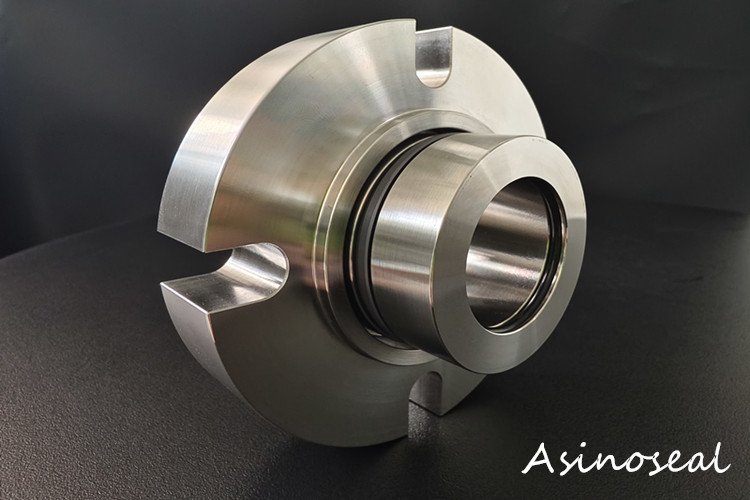
Core structure: composed of dynamic ring, static ring, spring, etc., sealed by the tight fit of the dynamic and static ring end faces.
Features: High precision, low leakage (can achieve zero leakage), high pressure and high speed resistance, low frictional power consumption, long service life, but complex structure, high installation requirements, suitable for high temperature, high pressure or strongly corrosive media.
2). Packing seal
Core structure: composed of packing gland, water seal ring, and flexible packing (such as graphite asbestos rope, polytetrafluoroethylene), sealed by compressing the packing to fit the shaft surface.
Features: Simple structure, low cost, easy maintenance, but with large leakage and easy wear of the shaft sleeve, suitable for medium and low pressure, room temperature working conditions.
3). Gas seal and liquid seal
Core principle: A pressure barrier is formed on the sealing surface through a gas or liquid medium to prevent leakage.
Features: Suitable for flammable, explosive, and toxic media, requiring auxiliary systems (such as sealed water and nitrogen) to maintain pressure.
4). Maze seal
Core structure: Utilizing multi-stage small gaps between the rotor and stator to form throttling and pressure reduction effects, with non-contact sealing.
Features: No wear and tear, long lifespan, suitable for large capacity, high-speed pumps (such as feedwater pumps), but with larger axial dimensions.
5). Floating ring seal
Core structure: Through the small gap throttling seal between the floating ring and the shaft sleeve, it relies on liquid pressure to automatically adjust the center.
Features: Good sealing effect, reliable operation, suitable for high-pressure applications, but high requirements for shaft verticality.
2、 Application of sealing forms for typical pump seal types
Due to differences in working conditions, the selection of sealing components varies among different types of pumps
1). Selection criteria for common sealing types of pump seal types
Centrifugal pump packing seals, mechanical seals, and labyrinth seals are selected for medium and low pressure packing seals, high pressure and high speed mechanical seals, and large capacity labyrinth seals
Mechanical seals for chemical pumps, gasket seals, and O-ring seals for highly corrosive media (made of polytetrafluoroethylene material), and gaskets or O-rings for static sealing surfaces
High temperature/high-pressure pump mechanical seal (made of titanium alloy material), floating ring seal made of high-temperature resistant material (such as titanium alloy)+auxiliary cooling system to ensure the stability of the sealing surface
Flammable and explosive medium pumps rely on inert gas (nitrogen) or sealing liquid to form isolation barriers for gas seals, liquid seals, and mechanical seals (fireproof and explosion-proof fillers) to prevent medium leakage.
3、 Key factors of sealing material and selection
The performance of the seal depends on material matching, and the following parameters need to be considered comprehensively:
1). Medium characteristics: corrosiveness (choose polytetrafluoroethylene, nickel based alloy), viscosity (high viscosity medium to avoid easily clogged structures).
corrosion-resistant chemical pump
1). Operating parameters: Temperature (-200 ℃ ultra-high pressure) determines the material's temperature and pressure resistance level.
2). Equipment parameters: speed (mechanical seal for high-speed selection), shaft diameter (labyrinth seal for large shaft diameter priority).
For example, when a chemical pump transports hydrochloric acid, a strong acid resistant mechanical seal (silicon carbide dynamic and static rings+fluororubber sealing rings) should be selected, and a flushing system should be used to remove crystals.
4、 Selection and maintenance suggestions
1). Priority principle: Mechanical seals are selected for high pressure and high speed, packing seals are selected for medium and low pressure simple working conditions, and dual seals (mechanical+gas seals) are selected for special media (such as highly toxic).
2). Installation points: The mechanical seal should ensure the parallelism of the dynamic and static rings, and the compression amount of the packing seal should be "drip leakage" (10-20 drops per minute).
By reasonably matching the sealing type, material, and operating conditions, the efficiency and safety of pump equipment can be significantly improved.