Español
 Pусский

1. Structure and working principle of single end spring mechanical seal
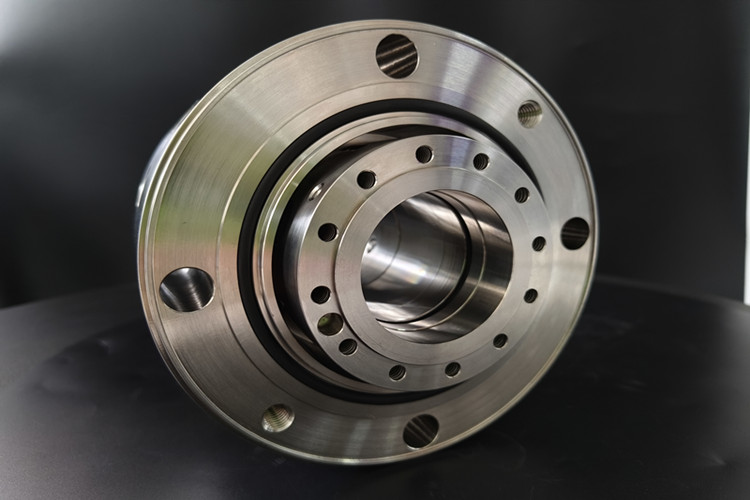
Single end spring mechanical seal is a mechanical seal device that only includes a pair of sealing end faces. Its core structure consists of a moving ring, a stationary ring, and a spring. The dynamic ring rotates with the shaft, while the static ring remains stationary. The spring applies pressure to the dynamic ring, causing the end faces of the dynamic and static rings to tightly adhere, forming a very thin liquid film to prevent medium leakage. Compared to multi spring or series structures, its design is simpler and mainly relies on a single set of springs to provide sealing pressure, suitable for working conditions with relatively basic sealing requirements.
Single end spring mechanical seal is a mechanical seal device that only includes a pair of sealing end faces. Its core structure consists of a moving ring, a stationary ring, and a spring. The dynamic ring rotates with the shaft, while the static ring remains stationary. The spring applies pressure to the dynamic ring, causing the end faces of the dynamic and static rings to tightly adhere, forming a very thin liquid film to prevent medium leakage. Compared to multi spring or series structures, its design is simpler and mainly relies on a single set of springs to provide sealing pressure, suitable for working conditions with relatively basic sealing requirements.
2. Core characteristics of single end spring mechanical seal
Structural features: It only includes one sealed friction pair, with a small number of parts, low manufacturing and installation difficulty, and easy maintenance. The spring directly acts on the moving ring, with concentrated pressure distribution and high requirements for installation coaxiality.
Working principle: Relying on the liquid film seal between the dynamic and static rings, when the equipment is running, the spring compensates for the wear of the end face and maintains the fitting pressure; If the liquid film is damaged, the spring can quickly push the moving ring to reset and restore the sealing effect.
3. Application and Comparison of Single End Spring Mechanical Seals
Applicable scenarios and limitations
Dimension single end spring mechanical seal spring series seal (multiple springs)
The working conditions require room temperature, normal pressure, low speed, non corrosive medium, high temperature, high pressure, particulate medium or high-speed rotating equipment
Simple cost structure, low manufacturing cost, multi spring design, high cost
Basic sealing requirements for sealing performance, allowing for minimal leakage with dual or multiple seals and extremely low risk of leakage
Difficulty of maintenance, easy disassembly and assembly, easy replacement of spare parts, complex structure, requiring professional tools and technology
Typical application areas
General machinery: such as water pumps, lubricating oil pumps, and other equipment without special sealing requirements.
Low risk medium: used for transporting lubricating, non-toxic and harmless media such as water and oil.
Elimination and substitution: In high-risk industries such as chemical and pharmaceutical industries, it has gradually been replaced by double end face or dry gas seals.
4. Key points for installation and maintenance
Installation precautions
Ensure that the shaft is coaxial with the sealing chamber to avoid uneven force on the spring causing eccentric wear.
Static ring installation requires reserved spring compression, usually 2-5mm, as specified in the equipment manual.
maintenance
Regularly check the elasticity of the spring, and replace it promptly if deformation or fatigue occurs.
Monitor the temperature of the sealing surface. An abnormal increase may indicate liquid film failure and require shutdown for troubleshooting.
troubleshooting
When the leakage increases, priority should be given to checking the wear of the dynamic and static rings or the attenuation of spring pressure.
Abnormal vibration may be caused by installation eccentricity and requires recalibration of coaxiality.
Core differences from other sealing types
Double end mechanical seal: It includes two sets of sealing surfaces and requires a sealing liquid system. It is suitable for toxic and explosive media, but its structure is complex and costly.
Dry gas seal: Non contact design, relying on gas film sealing, suitable for high-speed, volatile media, completely leak free but with high technical threshold.
Spring series sealing: Multiple springs in series provide uniform pressure, adapt to axial displacement and vibration, commonly used in harsh working conditions, but difficult to maintain.
5. Summary: Positioning of Single End Spring Mechanical Seals
Single end spring type mechanical seals still have certain applications in basic industrial scenarios due to their low cost and simplicity, but due to safety policies and sealing performance, they cannot be used for transporting high-risk media. When selecting, it is necessary to consider the characteristics of the medium, operating parameters, and regulatory requirements, and give priority to safer sealing solutions (such as double end faces or series structures), especially in the fields of chemical and energy industries where strict elimination policies must be followed.