Español
 Pусский

Fault phenomenon:
Due to different forces, fracture directions of the graphite ring can be classified as radial fracture and axial fracture.
Cause Analysis:
1.The graphite ring is broken due to high temperature and overload, and sometimes the graphite ring is broken due to improper installation of the mechanical seal. If the interference of the sealing ring matched with the graphite ring is too large, the graphite ring will also crack. For inlaid sealing rings, there is a possibility of leakage at the inlaid joint surface.
2.If such cases occur: Light hydrocarbon medium, no auxiliary facilities such as flushing, large PV value, then frictional heat is not easy to dissipate, vaporization between the sealing surfaces of the mechanical seal will occur, which increases the temperature of the graphite ring. Due to the good heat transfer of graphite, the auxiliary sealing ring heats up and expands, and the extrusion force is large. At the same time, there is thermal expansion stress near the sealing end face, and the two forces act to break the graphite ring.
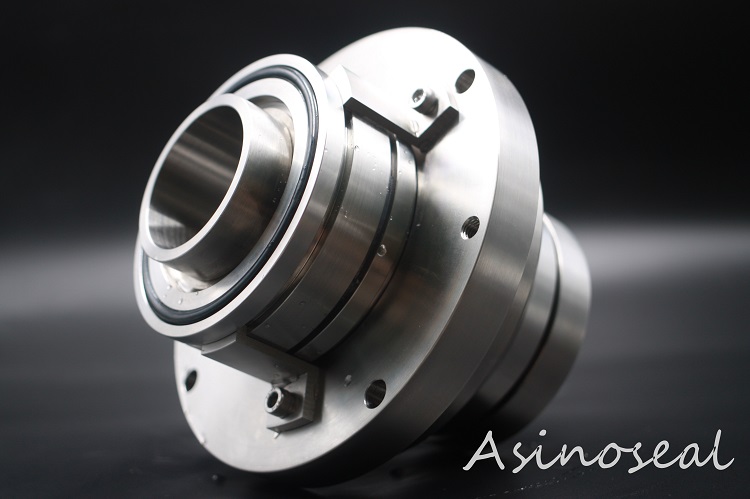 (If you want to view other products,pls visit this website & component seals)
3.For the balanced mechanical seals, such cases may also occur:due to incorrect installation, the step of the shaft sleeve withstands the step of the rotary face, and the axial force is too large, causing the graphite ring to break.
Solution
1. The graphite ring of the overall structure can be adopted, but strength should be considered in the design of the mechanical seal to prevent the graphite ring from breaking under load and high temperature.
2. For balanced mechanical seals, when installing, check whether the installation size is appropriate. The axial clearance of both the shaft sleeve step and the sealing ring should be controlled within 2 to 3 mm.
3. The material of the O-ring should be incompatible with the medium, and the interference should not be too large. The quality of the graphite ring should be checked.
Due to different forces, fracture directions of the graphite ring can be classified as radial fracture and axial fracture.
Cause Analysis:
1.The graphite ring is broken due to high temperature and overload, and sometimes the graphite ring is broken due to improper installation of the mechanical seal. If the interference of the sealing ring matched with the graphite ring is too large, the graphite ring will also crack. For inlaid sealing rings, there is a possibility of leakage at the inlaid joint surface.
2.If such cases occur: Light hydrocarbon medium, no auxiliary facilities such as flushing, large PV value, then frictional heat is not easy to dissipate, vaporization between the sealing surfaces of the mechanical seal will occur, which increases the temperature of the graphite ring. Due to the good heat transfer of graphite, the auxiliary sealing ring heats up and expands, and the extrusion force is large. At the same time, there is thermal expansion stress near the sealing end face, and the two forces act to break the graphite ring.
3.For the balanced mechanical seals, such cases may also occur:due to incorrect installation, the step of the shaft sleeve withstands the step of the rotary face, and the axial force is too large, causing the graphite ring to break.
Solution
1. The graphite ring of the overall structure can be adopted, but strength should be considered in the design of the mechanical seal to prevent the graphite ring from breaking under load and high temperature.
2. For balanced mechanical seals, when installing, check whether the installation size is appropriate. The axial clearance of both the shaft sleeve step and the sealing ring should be controlled within 2 to 3 mm.
3. The material of the O-ring should be incompatible with the medium, and the interference should not be too large. The quality of the graphite ring should be checked.