Español
 Pусский

Mechanical seals are developing in the direction of high parameters ( high temperature, high pressure, high speed and large shaft diameter ). Let’s talk about high temperature condition today.
Viscosity and lubricity of most liquid medium will decrease at high temperature, and their corrosiveness will increase. At the same time, the conventional auxiliary sealing ring, friction pairs and spring material will become unstable when temperature is higher than 250°C. For example, rubber parts of mechanical seals will lose elasticity, PTFE mechanical seals ( temperature when used cannot be higher than 220℃) lose their original dimensional accuracy, end faces of hard material will be thermally deformed or cracked, and end faces of soft carbon graphite will be blistered. Higher temperature of the sliding end surface will cause coking and solidification.These cases will seriously affect the normal operation of the mechanical seals.
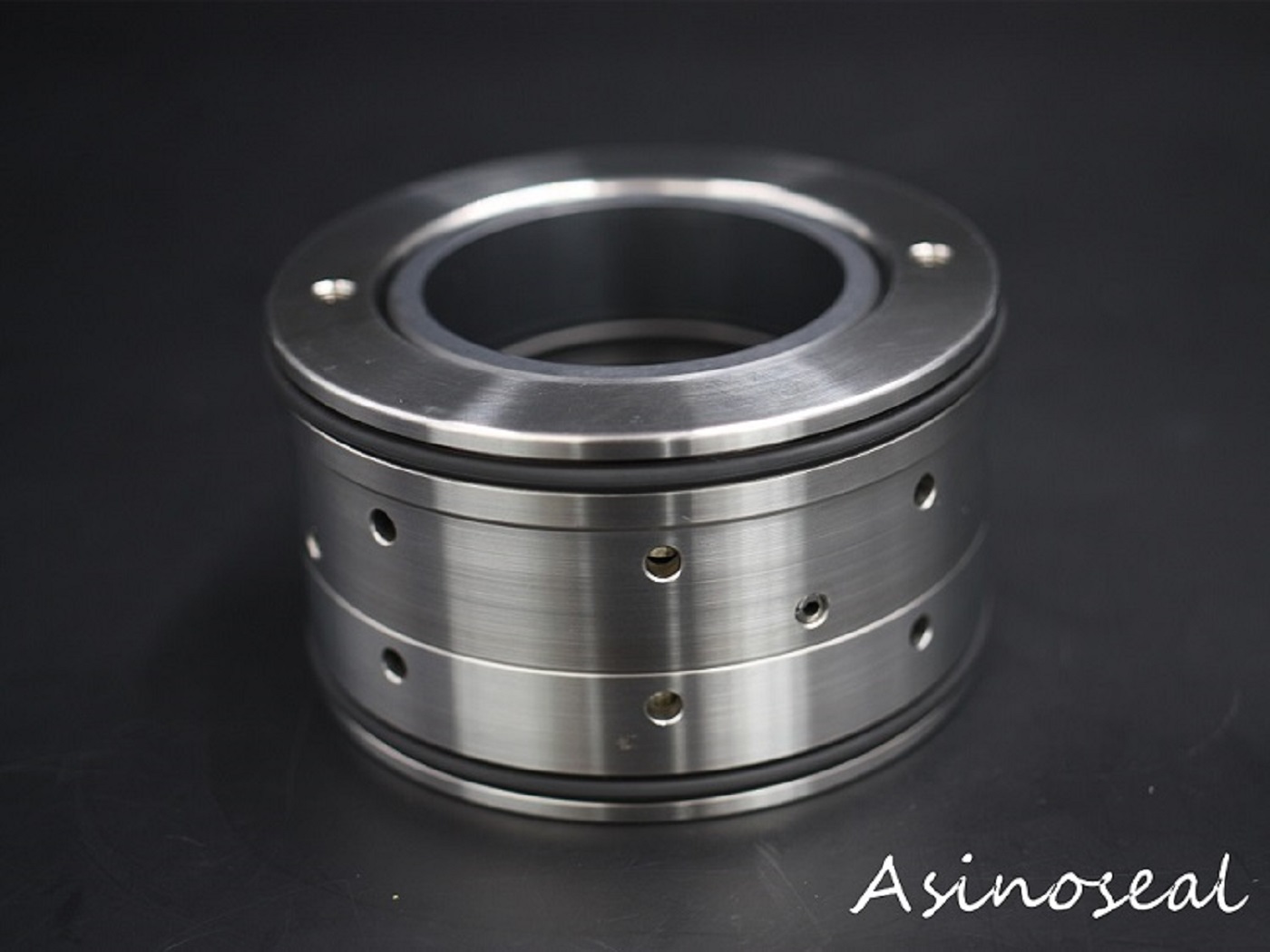
Regarding selection of mechanical seal materials under high temperature conditions, hot-pressed sintered SiC Vs antimony impregnated carbon graphite or solid TC Vs copper impregnated carbon graphite are recommended for rotary face and stationary seat; high-nickel alloy is recommended for spring material; Inorganic materials are recommended for auxiliary sealing ring material.
For high temperature and/or flammable medium, it is recommended to use tandem type mechanical seals with pressureless quenching fluids. On the atmosphere side, the quenching fluids can prevent deposition of cracked products, and it can also prevent direct leakage of the high-temperature medium.
Viscosity and lubricity of most liquid medium will decrease at high temperature, and their corrosiveness will increase. At the same time, the conventional auxiliary sealing ring, friction pairs and spring material will become unstable when temperature is higher than 250°C. For example, rubber parts of mechanical seals will lose elasticity, PTFE mechanical seals ( temperature when used cannot be higher than 220℃) lose their original dimensional accuracy, end faces of hard material will be thermally deformed or cracked, and end faces of soft carbon graphite will be blistered. Higher temperature of the sliding end surface will cause coking and solidification.These cases will seriously affect the normal operation of the mechanical seals.
Regarding selection of mechanical seal materials under high temperature conditions, hot-pressed sintered SiC Vs antimony impregnated carbon graphite or solid TC Vs copper impregnated carbon graphite are recommended for rotary face and stationary seat; high-nickel alloy is recommended for spring material; Inorganic materials are recommended for auxiliary sealing ring material.
For high temperature and/or flammable medium, it is recommended to use tandem type mechanical seals with pressureless quenching fluids. On the atmosphere side, the quenching fluids can prevent deposition of cracked products, and it can also prevent direct leakage of the high-temperature medium.