Español
 Pусский
Synthetic rubbers commonly used for auxiliary sealing rings of mechanical seals include nitrile rubber (NBR), fluororubber (FPM), ethylene-propylene rubber (EPM), and silicone rubber.This article continues the topic in previous article by talking about synthetic rubber.
1.Fluorine rubber
Commonly used and the mostly produced fluororubber in mechanical seals production is fluorine containing olefin copolymer,. There are two types, namely 23-type and 26-type fluororubber. Type 23 fluororubber is a copolymer of vinylidene fluoride and chlorotrifluoroethylene. It has excellent resistance to strong acids, especially fuming nitric acid, but it is difficult to process. Type 26 fluororubber is currently the most common variety of fluororubber. In order to adapt to various purposes, there are many brands of fluororubber, but the basic varieties are fluororubber-26 and fluororubber-246.
Commonly used and the mostly produced fluororubber in mechanical seals production is fluorine containing olefin copolymer,. There are two types, namely 23-type and 26-type fluororubber. Type 23 fluororubber is a copolymer of vinylidene fluoride and chlorotrifluoroethylene. It has excellent resistance to strong acids, especially fuming nitric acid, but it is difficult to process. Type 26 fluororubber is currently the most common variety of fluororubber. In order to adapt to various purposes, there are many brands of fluororubber, but the basic varieties are fluororubber-26 and fluororubber-246.
2.Ethylene Propylene Rubber It has excellent aging resistance and heat resistance, and can be used for a long time at 150°C with slow changes in physical and mechanical properties. It has good wear resistance and corrosion resistance, but has poor stability to hydrocarbon oils, so it cannot be used in mineral oils. If the mechanical seal is installed with the help of grease and lubricating oil, the influence of this factor must also be considered. However, it is particularly resistant to silicone oil, phosphate ester hydraulic oil, synthetic lubricants, ketones, alcohol solutions, medium-strength acids and alkalis, and is also resistant to high-pressure water vapor.
3.Silicone Rubber
It has a wide temperature range (-100¯350°C) and high thermal stability, and can generally be used for a long time at 200¯300°C. Silicone rubber is non-toxic, odorless, and has no adverse effects on the human body, but has poor solvent resistance, and is prone to ionic cracking under the action of acid and alkali, and will decompose in high-pressure water vapor, with low mechanical strength and no wear resistance. It is mainly used for various mediums such as animal and vegetable oils, mineral oils, oxygen, weak acids, weak bases, etc. under high, low temperature, high speed rotation, etc. It is not suitable for solvent media such as benzene, toluene, acetone, etc., nor is it suitable for high pressure water vapor .
It has a wide temperature range (-100¯350°C) and high thermal stability, and can generally be used for a long time at 200¯300°C. Silicone rubber is non-toxic, odorless, and has no adverse effects on the human body, but has poor solvent resistance, and is prone to ionic cracking under the action of acid and alkali, and will decompose in high-pressure water vapor, with low mechanical strength and no wear resistance. It is mainly used for various mediums such as animal and vegetable oils, mineral oils, oxygen, weak acids, weak bases, etc. under high, low temperature, high speed rotation, etc. It is not suitable for solvent media such as benzene, toluene, acetone, etc., nor is it suitable for high pressure water vapor .
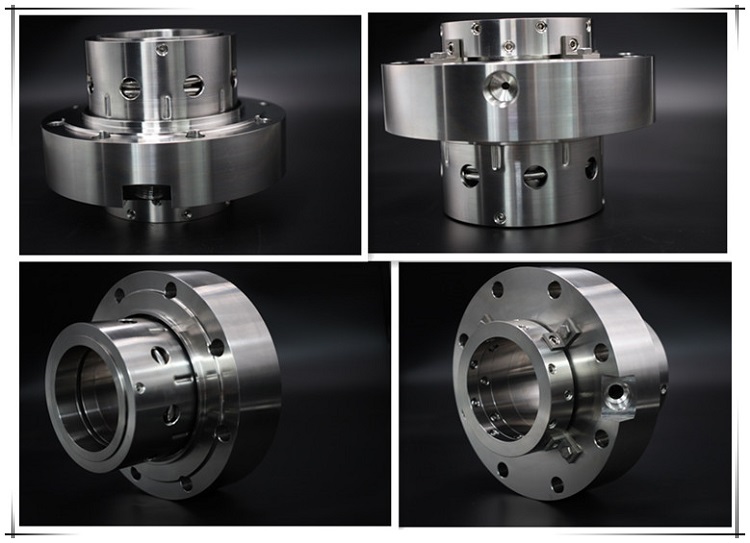
If you want to view other products,pls visit this website & component seals