Español
 Pусский

Commonly used materials for auxiliary seals include synthetic rubber, polytetrafluoroethylene, flexible graphite, and metal materials. We talked about synthetic rubber in the last two articles, and today we talk about other materials like PTFE.
1.Polytetrafluoroethylene
PTFE is resistant to the corrosion of almost all strong acids, strong alkalis and strong oxidants; because of its low friction coefficient, it is an excellent anti-friction and self-lubricating material for mechanical seals, but its thermal conductivity is very poor, only 0.244W/( m.K). Adding bronze powder, molybdenum disulfide, graphite, etc. can improve its thermal conductivity and self-lubrication. PTFE has high heat resistance and cold resistance, and the operating temperature range is -180¯250°C. Water resistance, aging resistance, non-combustibility, toughness and processing performance are all very good. It is often made into a V-ring as an auxiliary seal for rotating and non-rotating rings of mechanical seals.
In addition, PTFE can be used to coat other materials, such as PTFE-coated stainless steel and PTFE-coated rubber to form a composite material auxiliary seal for mechanical seals. Because they combine the advantages of two or more materials, they have Better sealing effect.
PTFE is resistant to the corrosion of almost all strong acids, strong alkalis and strong oxidants; because of its low friction coefficient, it is an excellent anti-friction and self-lubricating material for mechanical seals, but its thermal conductivity is very poor, only 0.244W/( m.K). Adding bronze powder, molybdenum disulfide, graphite, etc. can improve its thermal conductivity and self-lubrication. PTFE has high heat resistance and cold resistance, and the operating temperature range is -180¯250°C. Water resistance, aging resistance, non-combustibility, toughness and processing performance are all very good. It is often made into a V-ring as an auxiliary seal for rotating and non-rotating rings of mechanical seals.
In addition, PTFE can be used to coat other materials, such as PTFE-coated stainless steel and PTFE-coated rubber to form a composite material auxiliary seal for mechanical seals. Because they combine the advantages of two or more materials, they have Better sealing effect.
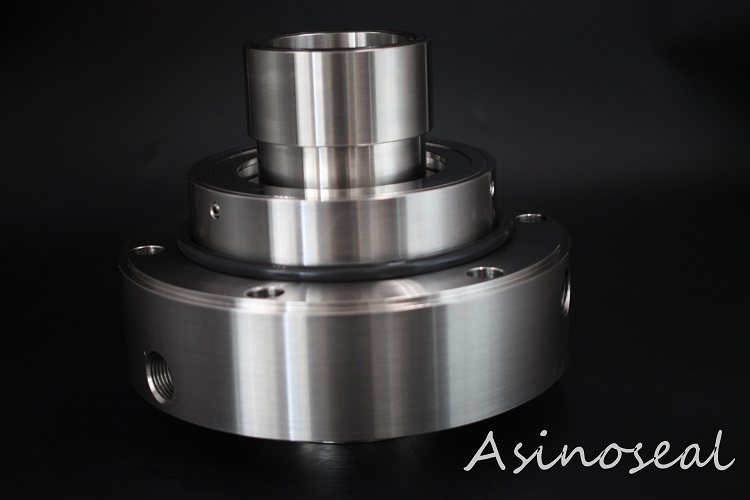
If you want to view other products,pls visit this website &component seals
2.Flexible graphite
It not only has the excellent thermal stability, chemical stability and high thermal conductivity of ordinary graphite, but also has unique compressibility and resilience. It can withstand high and low temperatures. When the temperature of the conveying medium is not lower than 200°C, the auxiliary sealing material should preferably use flexible graphite for the better sealing effects of mechanical seals. However, the strength of flexible graphite is low, and attention should be paid to strengthening and protecting it.
Flexible graphite molded into rectangular rings, wedge rings, and gaskets is often used for mechanical seal non-rotating ring auxiliary sealing rings, rotating ring auxiliary sealing rings, and static gaskets for the connection between bellows components and shaft sleeves for metal bellows mechanical seals.
It not only has the excellent thermal stability, chemical stability and high thermal conductivity of ordinary graphite, but also has unique compressibility and resilience. It can withstand high and low temperatures. When the temperature of the conveying medium is not lower than 200°C, the auxiliary sealing material should preferably use flexible graphite for the better sealing effects of mechanical seals. However, the strength of flexible graphite is low, and attention should be paid to strengthening and protecting it.
Flexible graphite molded into rectangular rings, wedge rings, and gaskets is often used for mechanical seal non-rotating ring auxiliary sealing rings, rotating ring auxiliary sealing rings, and static gaskets for the connection between bellows components and shaft sleeves for metal bellows mechanical seals.
3.Metal material Under high pressure, especially when high pressure and high temperature exist at the same time, the above-mentioned materials are not competent. At this time, only metal materials are used to make auxiliary seals of the mechanical seals. According to different working conditions, there are different metal materials for selection. The metal hollow O-ring materials include OCr18Ni9, OCr18Ni12Mo2Ti, 1Cr18Ni9Ti, etc. For wedge-shaped gaskets with triangular end faces, chrome steel is often used, such as OCr13. For flat pads, copper or aluminum pads are mostly used.
Under the condition of high pressure and high temperature, the strength and elastic modulus of the above materials will decrease obviously, and heat-resistant alloys such as Inconel should be used at this time.
Under the condition of high pressure and high temperature, the strength and elastic modulus of the above materials will decrease obviously, and heat-resistant alloys such as Inconel should be used at this time.