Español
 Pусский

According to statistics,service life of mechanical seal of high temperature oil pumps can reach more than one year under condition of normal operation of auxiliary systems and stable operation of pumps. However,use of single-end bellows-type mechanical seals and auxiliary systems can no longer meet the requirements, and four main problems have been exposed. This article follows the previous artical by introducing the other two of them:
1.High operating cost and large energy consumption. For atmospheric and vacuum tower bottom residual oil pumps,external flushing plan 32 is adopted,which means flushing liquid directly enters process medium, causing a larger consumption and a higher production cost.
Using self-flushing plan 21 to cool high-temperature medium before injecting it into the pump will inevitably consume a lot of heat and reduce efficiency of the pump. At the same time, the amount of cooling water consumed is also quite large.
2.In both plan 21 and plan 32, quench water should be passed into back of stationary seat of mechanical seal for cooling. Its function is to cool the rotary face and stationary seat, so as to reduce the temperature between the bellows and the friction pairs to a certain extent to provides a suitable operating environment and prevent high temperature deformation or failure of mechanical seal components, so as to achieve the purpose of improving the sealing effect and prolonging the service life.
However, because cooling water scales on high-temperature parts, and the scale is located between the friction pairs of the mechanical seal,shaft sleeves close to them and the wave plate of bellows, the said bellows loses its elasticity and fails.
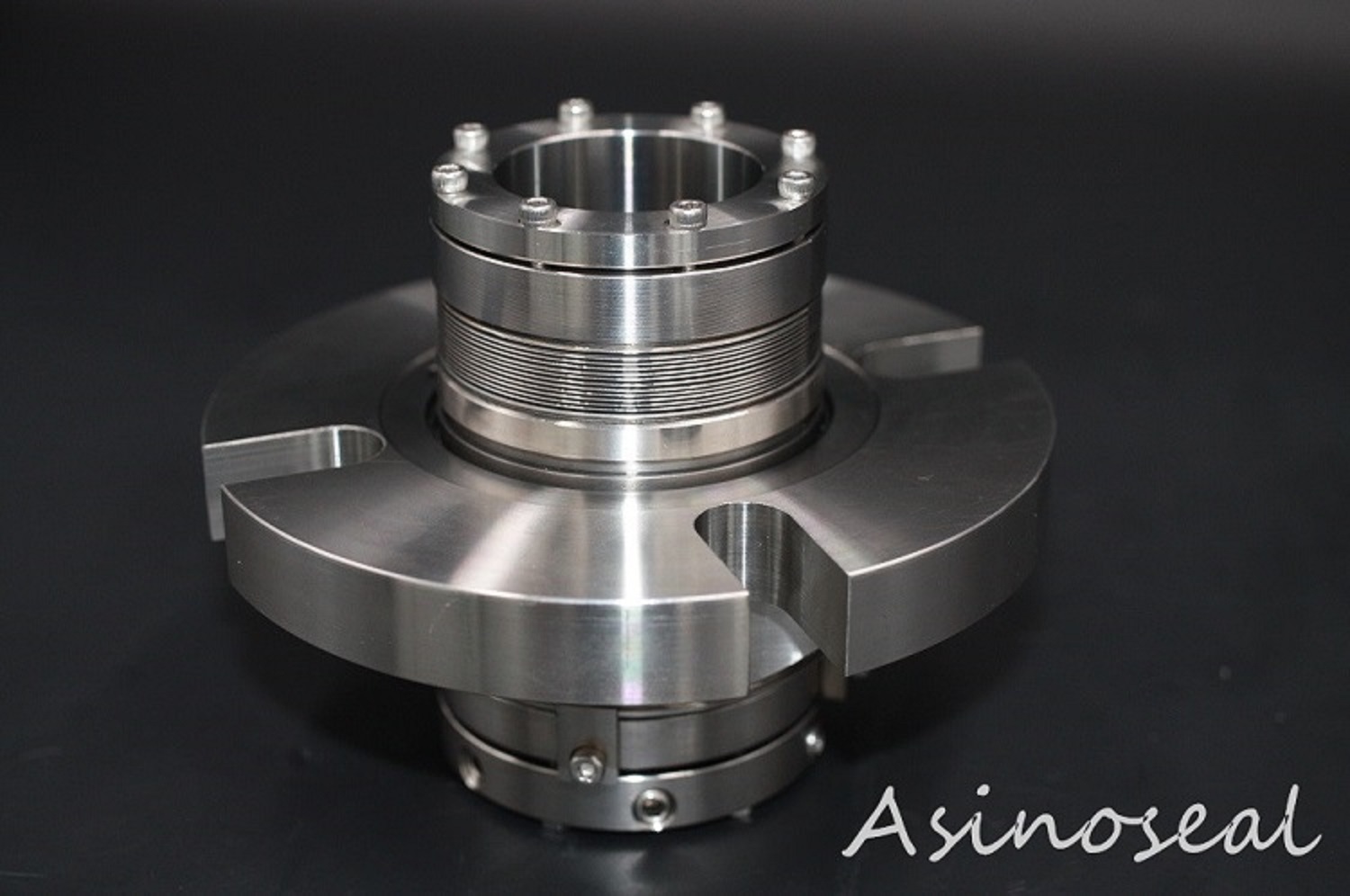
1.High operating cost and large energy consumption. For atmospheric and vacuum tower bottom residual oil pumps,external flushing plan 32 is adopted,which means flushing liquid directly enters process medium, causing a larger consumption and a higher production cost.
Using self-flushing plan 21 to cool high-temperature medium before injecting it into the pump will inevitably consume a lot of heat and reduce efficiency of the pump. At the same time, the amount of cooling water consumed is also quite large.
2.In both plan 21 and plan 32, quench water should be passed into back of stationary seat of mechanical seal for cooling. Its function is to cool the rotary face and stationary seat, so as to reduce the temperature between the bellows and the friction pairs to a certain extent to provides a suitable operating environment and prevent high temperature deformation or failure of mechanical seal components, so as to achieve the purpose of improving the sealing effect and prolonging the service life.
However, because cooling water scales on high-temperature parts, and the scale is located between the friction pairs of the mechanical seal,shaft sleeves close to them and the wave plate of bellows, the said bellows loses its elasticity and fails.