Español
 Pусский



Description:
Reactor is one of the key equipment in petrochemical, chemical fiber, chemical and pharmaceutical industries. Compared with the mechanical seals of other containers,the working conditions of the mechanical seal of the reactor is the most severe because chemical reaction will cause the change of pressure, temperature and material form. For above reasons,Compared with mechanical seals for pump and other rotating machinery, agitator mechanical seals have unique use conditions and operation characteristics.
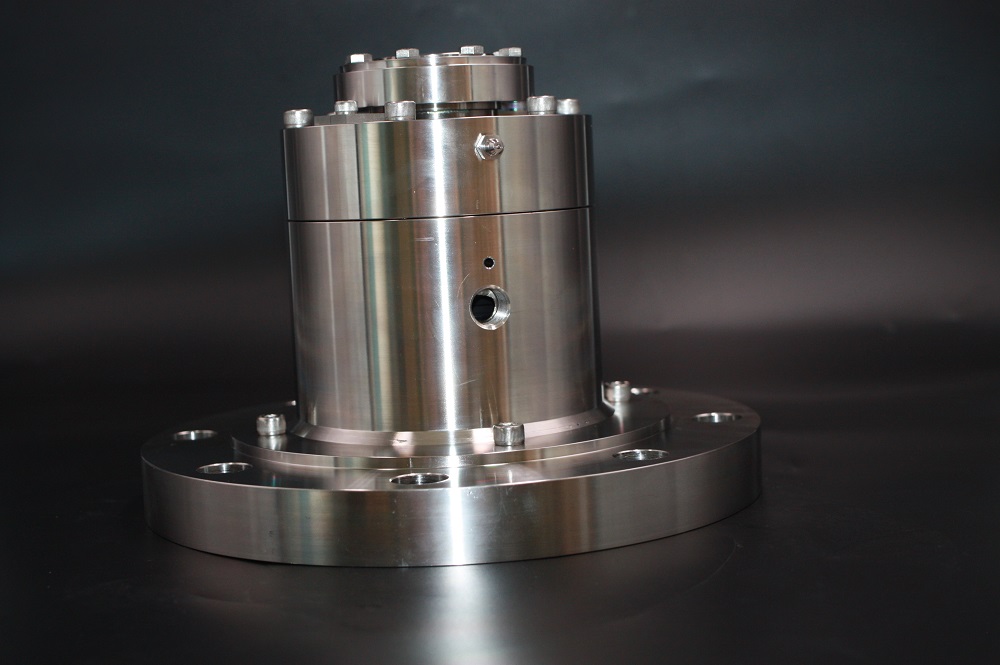
The reactor is generally composed of four parts: kettle body, agitator, transmission mechanism and shaft sealing device. The mounting type of stirring shaft includes top, bottom, and side. This dual agitator mechanical seal AS-F8UDL is suitable for different mounting types of stirring shafts and can be generally used in different kinds of reactors.
About Us:
Background Knowledge:
Damage Causes of the agitator mechanical seals
This paper takes the agitator mechanical seal of a melamine slurry tank in a Chinese company as an example to analyze the cause of damage to the agitator mechanical seal.
1.1 The installation of the stationary ring seat lacks fineness
Usually, there is no corresponding positioning member between the stationary ring seat and the sealing chamber of the agitator, and the installation concentricity of the shaft sleeve and the stationary seat of the agitator mechanical seal is mainly determined by the experience of the assembling staff, so that the installation efficiency is directly affected by human factors. Among them, the distance between the shaft sleeve and the stationary seat is relatively small, and the half-side distance is 0.5mm. Therefore, under the influence of factors such as the large swing of the agitator shaft and the error occuring during the installation of the stationary ring seat, friction between the stationary seat and the shaft sleeve often occurs and causes breakage, further causing damage to the agitator mechanical seal.
1.2 Stirring shaft swing and agitator vibration
Usually, the thickness of the melamine slurry tank wall of the agitator itself is relatively small, and its facing rigidity cannot meet the relevant requirements well, resulting in a relatively large vibration during the actual operation of the agitator. The wear on the connection position between the stirring shaft and the reducer is relatively serious, and the matching distance between the shaft and the sleeve is relatively large, which further causes the stirring shaft to swing greatly during operation At the same time, due to the relatively small distance between the supporting shafts of the reducer and the relatively short shaft, in which the cantilever length of the stirring shaft is relatively large, and the deflection of the stirring shaft is relatively high. During the continuous operation of the agitator, the wear between the shaft sleeve and the shaft is gradually serious, which will cause the agitator shaft to continuously increase the swing range. Under the influence of the stirring shaft swing, the overall vibration frequency of the agitator gradually increases. On the contrary, the violent vibration of the agitator also promotes the wear degree of the stirring shaft and the shaft sleeve of the reducer, and further increases the swing amplitude. In this vicious cycle, damage to the agitator mechanical seal often occurs.
1.3 There are problems in the selection of mechanical seal friction pair materials
In the past, the friction pair materials used in mechanical seals were mainly corundum and carbon graphite, and according to their physical characteristics, they were mainly used in the form of soft vs hard materials. At the same time, the processing material is melamine slurry, which contains large granular cyanamide crystalline substances, which is very easy to cause strong wear on the softer ring (that is, the rotary face of the agitator mechanical seal), resulting in a decrease in the mechanical seal performance and resulting in leakage.
Send Message
Related Products