Español
 Pусский

In recent years, great progress has been made in the research on temperature characteristics of friction end faces of mechanical seals. At present, the end face temperature test technologies can be divided into two categories: contact type and non-contact type.
Mechanical seal end face temperature test technologies of contact type are mainly thermocouple method and thermal resistance method. The thermocouple method is to bury the thermocouple in the stationary seat, and attach the end to be measured to the side close to the friction end face. The closer the end to be measured is to the friction end face, the more accurate the measured result.
The remarkable feature of the thermocouple method is that it has high test accuracy, good relative stability, and can accurately reflect the change of the end face temperature of the mechanical seals. The disadvantage is that the response speed is relatively slow (compared to thermal resistance method), and the absolute temperature is not accurate enough. After all,it is currently the most widely used method in temperature measurement of end faces of mechanical seals.
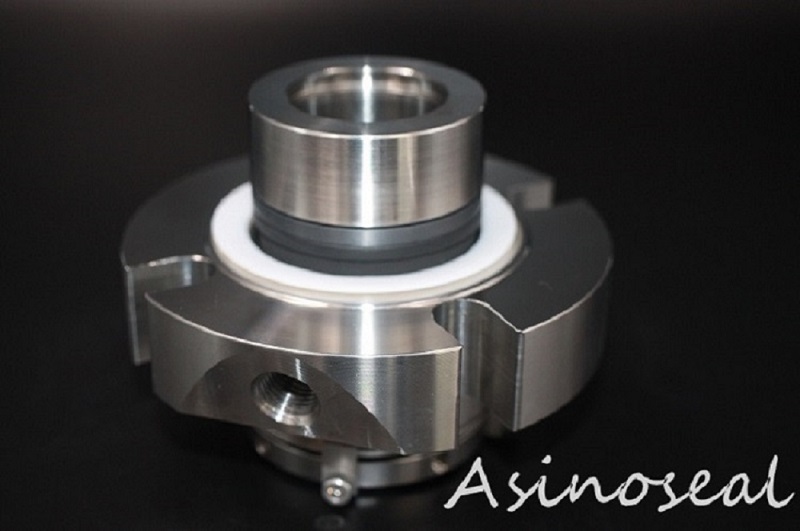
( If you want to view other products,pls visit this website & mechanical seals)
The thermal resistance method is a method of using thermal resistance temperature sensor to measure temperature of friction end faces of mechanical seals, and the principle is the same as that of the thermocouple method. The thermal resistance sensor has high measurement accuracy and fast response speed, so it can intuitively reflect the friction and heating of the sealing end faces when measuring the temperature of the end faces of the mechanical seals.
Its disadvantages are poor linearity, fast aging, large volume, and high sensitivity to ambient temperature. Moreover,in contrast to the good effect when this method is used to measure the temperature of the mechanical seal end faces in the fluid lubrication state, In the mixed friction state, the stability of the test data is poor.
Restricted by the depth of the opening, both methods cannot accurately measure the temperature of the friction end faces of mechanical seals.
Mechanical seal end face temperature test technologies of contact type are mainly thermocouple method and thermal resistance method. The thermocouple method is to bury the thermocouple in the stationary seat, and attach the end to be measured to the side close to the friction end face. The closer the end to be measured is to the friction end face, the more accurate the measured result.
The remarkable feature of the thermocouple method is that it has high test accuracy, good relative stability, and can accurately reflect the change of the end face temperature of the mechanical seals. The disadvantage is that the response speed is relatively slow (compared to thermal resistance method), and the absolute temperature is not accurate enough. After all,it is currently the most widely used method in temperature measurement of end faces of mechanical seals.
( If you want to view other products,pls visit this website & mechanical seals)
The thermal resistance method is a method of using thermal resistance temperature sensor to measure temperature of friction end faces of mechanical seals, and the principle is the same as that of the thermocouple method. The thermal resistance sensor has high measurement accuracy and fast response speed, so it can intuitively reflect the friction and heating of the sealing end faces when measuring the temperature of the end faces of the mechanical seals.
Its disadvantages are poor linearity, fast aging, large volume, and high sensitivity to ambient temperature. Moreover,in contrast to the good effect when this method is used to measure the temperature of the mechanical seal end faces in the fluid lubrication state, In the mixed friction state, the stability of the test data is poor.
Restricted by the depth of the opening, both methods cannot accurately measure the temperature of the friction end faces of mechanical seals.