Español
 Pусский
1. Background of Environmental Protection Technology Development
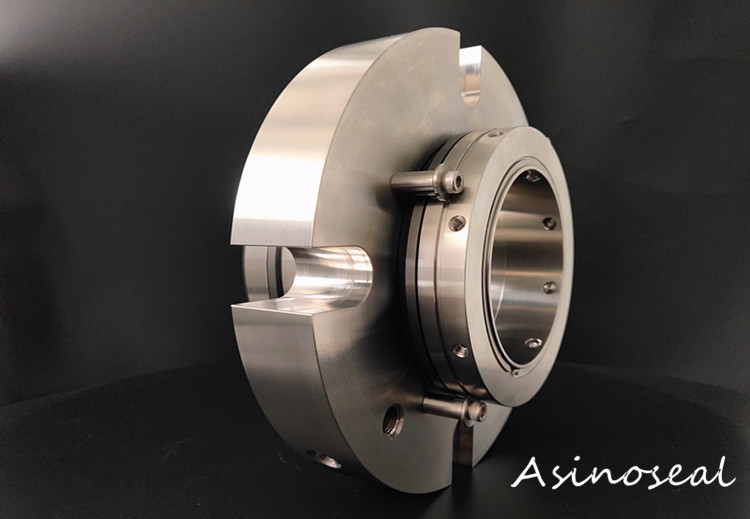
Against the backdrop of increasing environmental awareness and increasingly strict environmental regulations, the mechanical seal industry is actively responding and developing towards a green and low-carbon direction. The country's control over pollution emissions is becoming increasingly strict, and mechanical seals, as an important part of the manufacturing industry, have attracted high attention to environmental issues in their production and use, which has promoted the research and application of environmental protection technologies in the industry.
2. Specific environmental protection technologies
Material research and development
Corrosion resistant materials: In chemical, pharmaceutical and other fields, sealing materials need to have excellent corrosion resistance to cope with harsh environments. Developing and applying such materials can reduce seal failure and leakage caused by corrosion, lower the risk of environmental pollution, extend the service life of seals, and reduce waste generation.
High temperature materials: With the upgrading of industrial applications, the demand for sealing in high-temperature environments has increased. High temperature resistant sealing materials can ensure stable operation under high temperature conditions, avoid sealing performance degradation and leakage caused by high temperatures, and reduce energy waste and environmental pollution.
New wear-resistant materials: The research and application of new wear-resistant materials have improved the durability of seals, reduced the frequency of replacing seals due to wear, thereby reducing the amount of waste generated, and also reducing the impact of fluid leakage on the environment that may be caused by seal wear.
Manufacturing process optimization
Surface coating technology: the abrasion resistance, corrosion resistance and aging resistance of seals can be improved by coating the seals with special performance. This not only extends the service life of the seals, reduces replacement frequency, and minimizes waste generation, but also improves sealing performance, reduces leakage risks, and thus reduces environmental pollution.
Fluid dynamics design: Optimizing the fluid dynamics design of seals can reduce the frictional resistance between seals and fluids, lower energy consumption and maintenance costs. Reducing energy consumption means a decrease in energy consumption, indirectly reducing environmental pollution during the energy production process; Meanwhile, reducing maintenance costs may decrease the amount of waste generated due to frequent maintenance and component replacement.
Intelligent monitoring technology
Combining sensors and intelligent technology to achieve online monitoring and automatic adjustment of the sealing system, real-time monitoring of the sealing status can be achieved. When abnormal sealing occurs, timely detection and measures can be taken to avoid leakage accidents and reduce the pollution of harmful substances to the environment. Meanwhile, intelligent adjustment can keep the sealing system in the optimal operating state, improve energy utilization efficiency, and reduce energy consumption.
3. The significance brought by environmental protection technology
Reducing pollution emissions: The application of environmental protection technologies has improved the reliability and durability of mechanical seals, reduced fluid leakage, and thus reduced pollution to air, soil, and water bodies. For example, in industries such as chemical and petroleum, effective prevention of corrosive, toxic, flammable and explosive liquid and gas leaks ensures production safety and environmental safety.
Resource conservation: The use of new materials and processes extends the service life of seals, reduces the consumption of raw materials and the generation of waste. Meanwhile, energy-saving design reduces energy consumption and achieves efficient utilization of resources.
Compliance with regulatory requirements: In the context of increasingly strict environmental policies, adopting environmental protection technologies helps enterprises comply with relevant regulatory requirements, avoid penalties for violations, and ensure the normal production and operation of enterprises.