Español
 Pусский
In hot oil pumps, pits and scars are often found on the end face of the carbon graphite ring of the mechanical seal. This is because when the carbon graphite material is selected, the temperature at which the impregnant and the carbon graphite material are combined has not been fully studied. Due to the difference of the impregnation, the applicable temperature range of the carbon graphite seal is also different. For example, with graphite impregnated with phenolic resin, when the surface temperature of the friction pair exceeds 180°C, the resin will decompose to form hard particles and precipitate volatiles on the sealing end surface, forming scars, thereby greatly increasing friction and causing surface damage and leakage. When conditions permit, reducing the contact width of the friction pair is effective in reducing the temperature rise caused by friction heat. Therefore, appropriately reducing the friction width of the carbon graphite ring is beneficial to prevent the occurrence of blisters.
The poor quality carbon graphite ring has many internal pores, which expand during use, blowing carbon particles and resin volatiles out to form blisters, and will cause adhesion of the sealing end surface of the mechanical seal. Therefore, copper immersion or antimony graphite is recommended for high temperature conditions.
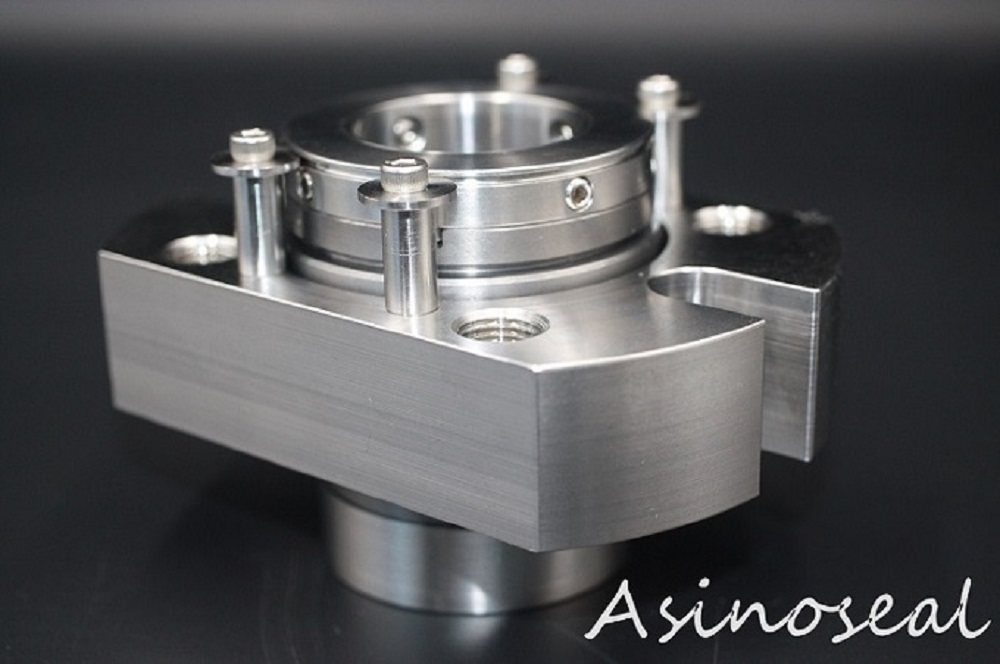
In high temperature situations, it is advantageous to choose impregnated metal carbon graphite.In high temperature situations, it is advantageous to choose impregnated metal carbon graphite. Because both the contact end surface temperature and thermal conductivity are much higher than condition using impregnated resin.However, during the operation of the mechanical seal, if dry friction occurs, the seal is more likely to fail, and the end face temperature instantaneously rises high , thus molten droplets will appear on the metal impregnation , causing the end face to weld and the seal breakage.Carbon graphite rings impregnated with babbitt alloy, copper alloy or antimony are not suitable for high temperature dry friction conditions, under which impregnated sliver should be used.This is because silver has good self-lubricating properties and can effectively prevent occlusal fracture of mechanical seal from occurring.
The poor quality carbon graphite ring has many internal pores, which expand during use, blowing carbon particles and resin volatiles out to form blisters, and will cause adhesion of the sealing end surface of the mechanical seal. Therefore, copper immersion or antimony graphite is recommended for high temperature conditions.
In high temperature situations, it is advantageous to choose impregnated metal carbon graphite.In high temperature situations, it is advantageous to choose impregnated metal carbon graphite. Because both the contact end surface temperature and thermal conductivity are much higher than condition using impregnated resin.However, during the operation of the mechanical seal, if dry friction occurs, the seal is more likely to fail, and the end face temperature instantaneously rises high , thus molten droplets will appear on the metal impregnation , causing the end face to weld and the seal breakage.Carbon graphite rings impregnated with babbitt alloy, copper alloy or antimony are not suitable for high temperature dry friction conditions, under which impregnated sliver should be used.This is because silver has good self-lubricating properties and can effectively prevent occlusal fracture of mechanical seal from occurring.